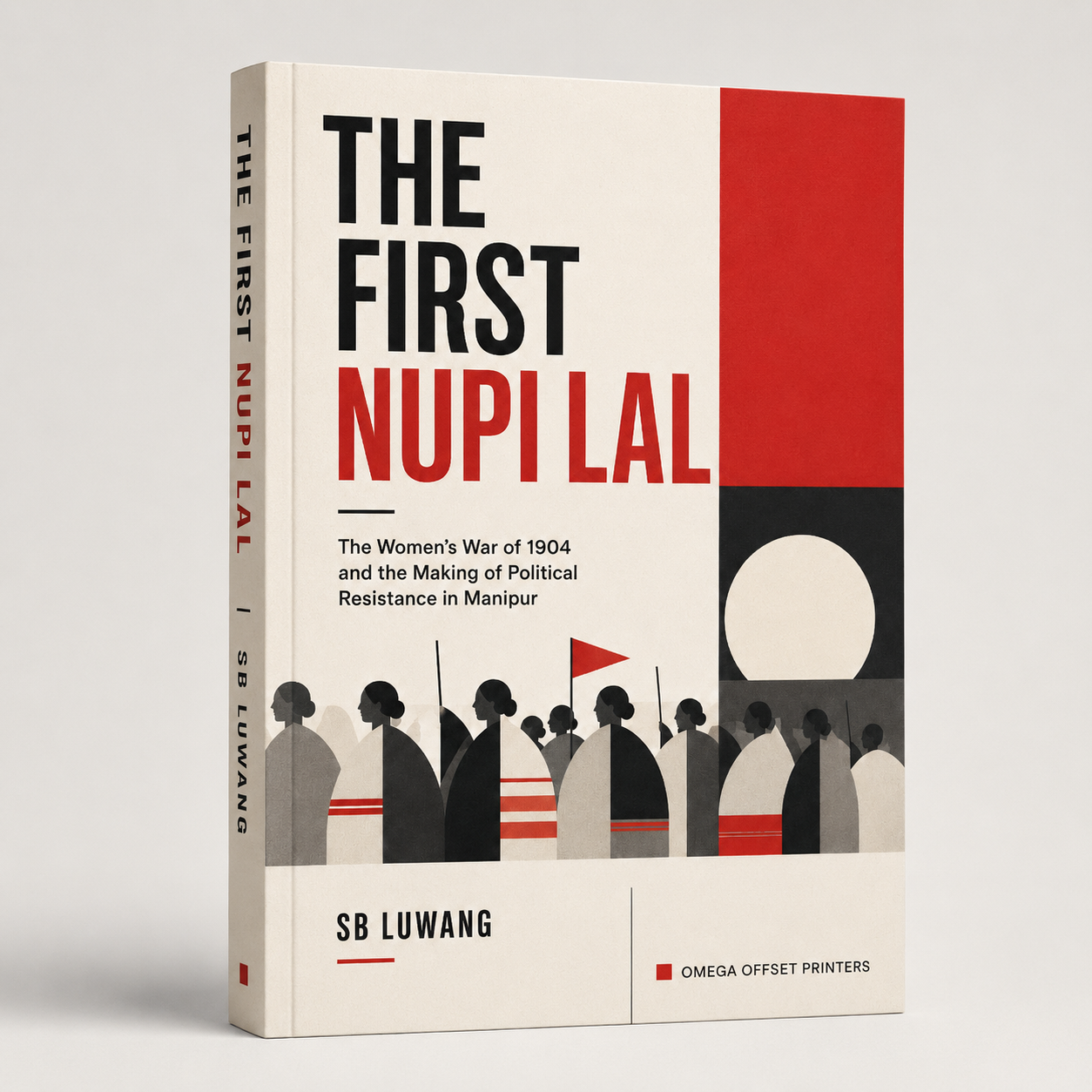
The First Nupi Lal presents a detailed, source-based account of the extraordinary women’s movement that shook colonial Manipur in 1904.
Following a series of fires in Imphal, Political Agent H. St. P. Maxwell ordered the temporary revival of lallup, requiring labour and materials for rebuilding an official bungalow. The decision triggered petitions, mass gatherings, arrests, and ultimately the mobilisation of thousands of Manipuri women who confronted colonial authority directly.
Author SB Luwang reconstructs the movement using British administrative reports, Political Agency records, Maxwell-era documents, academic studies, archival publications, and later historical scholarship. Rather than repeating simplified popular narratives, the book carefully distinguishes documented evidence from colonial allegation, later memory, and historical interpretation.
The book explores:
- Manipur after the Anglo-Manipur War of 1891
- British administration under H. St. P. Maxwell
- The traditional lallup system and its transformation
- Women’s economic power in Khwairamband Keithel
- The fires and political crisis of 1904
- Maxwell’s order of 12 September 1904
- The petition and mass protest of September 1904
- The gathering of thousands of women on 5 October
- Women’s household and economic arguments against compulsory labour
- Police, military deployment, arrests, and the Rajkumar controversy
- The women whose names survive—and the thousands who remain unnamed
- The relationship between the First Nupi Lal and the Second Nupi Lal of 1939
- The continuing political legacy of Manipur’s women
Written as accessible narrative history while maintaining serious attention to sources, The First Nupi Lal is suitable for students, researchers, history enthusiasts, libraries, competitive-examination candidates, and anyone interested in Manipur, Northeast India, colonial history, women’s history, and resistance movements.




Reviews
There are no reviews yet.