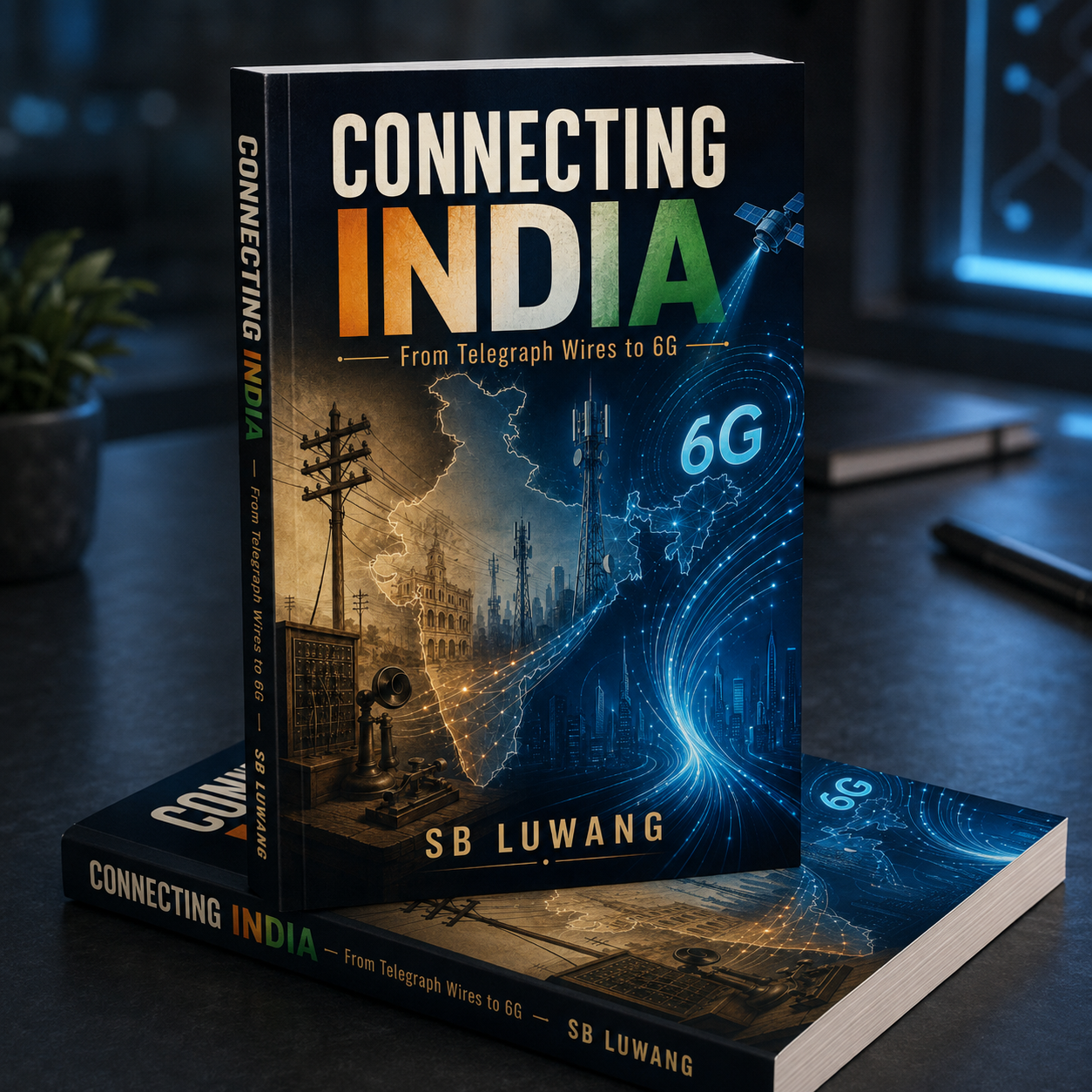
From waiting years for a telephone connection to living inside an always-connected digital network—this is the story of how India became one of the world’s largest telecommunications nations.
In Connecting India: From Telegraph Wires to 6G, SB Luwang presents a comprehensive history of Indian telecommunications across nearly two centuries.
The book begins with the colonial electric telegraph and the first telephone exchanges of the nineteenth century. It follows India’s long period of telephone scarcity, trunk calls and waiting lists before examining the indigenous technology movement led by C-DOT, the creation of MTNL and VSNL, and the dramatic liberalisation of the telecom sector during the 1990s.
The story then moves through the milestones that transformed everyday life: the first mobile call in 1995, TRAI and modern telecom regulation, the 1999 revenue-sharing reforms, prepaid mobile services, the rise and disappearance of the PCO, the subscriber explosion, spectrum auctions and the 2G controversy.
The book also examines the transition from voice to data through 3G, smartphones, 4G and the 2016 data-price revolution, followed by industry consolidation, rural connectivity, BharatNet and the telecommunications infrastructure beneath Digital India.
Later chapters explore the pandemic stress test, India’s rapid 5G deployment, BSNL’s indigenous 4G network, telecom manufacturing and technology sovereignty, cybersecurity, privacy, internet shutdowns, spam and financial fraud, the Telecommunications Act 2023, submarine cables, satellite broadband and direct-to-device communications.
Finally, Connecting India looks toward the next technological frontier: 5G-Advanced, Bharat 6G, IMT-2030, AI-native networks, integrated sensing, standards-essential patents and India’s ambition to become a global telecom technology exporter.
What This Book Covers
- The electric telegraph and colonial communications network
- India’s first telephone exchanges
- Trunk calls, STD and telephone waiting lists
- C-DOT and indigenous digital switching
- MTNL, VSNL and BSNL
- National Telecom Policies of 1994 and 1999
- The first mobile call in India
- TRAI, TDSAT and telecom regulation
- Prepaid mobile and the PCO revolution
- India’s billion-subscriber transformation
- Spectrum economics and the 2G controversy
- 3G, smartphones and mobile internet
- Reliance Jio and the 4G data revolution
- Airtel, Vodafone Idea and market consolidation
- USOF, BharatNet and rural connectivity
- UPI, Digital India and telecom infrastructure
- COVID-19 and the importance of connectivity
- India’s 5G rollout
- Indigenous 4G and telecom manufacturing
- Privacy, surveillance and cybersecurity
- Spam, spoofing and telecom fraud
- Telecommunications Act 2023
- Submarine cables and satellite communications
- Starlink, OneWeb and emerging satcom systems
- Bharat 6G Vision and IMT-2030
- 3GPP, TSDSI, 5Gi and global standards
- India’s prospects as a telecom technology exporter
Who Should Read This Book?
Ideal for students, researchers, telecom professionals, policymakers, engineers, civil-service aspirants, business readers and anyone interested in India’s technological and economic transformation.
Connecting India is not merely a history of telephones. It is the story of how communications changed distance, markets, government, business and everyday life—and how India moved from importing telecom technology toward helping define the networks of the future.




Reviews
There are no reviews yet.