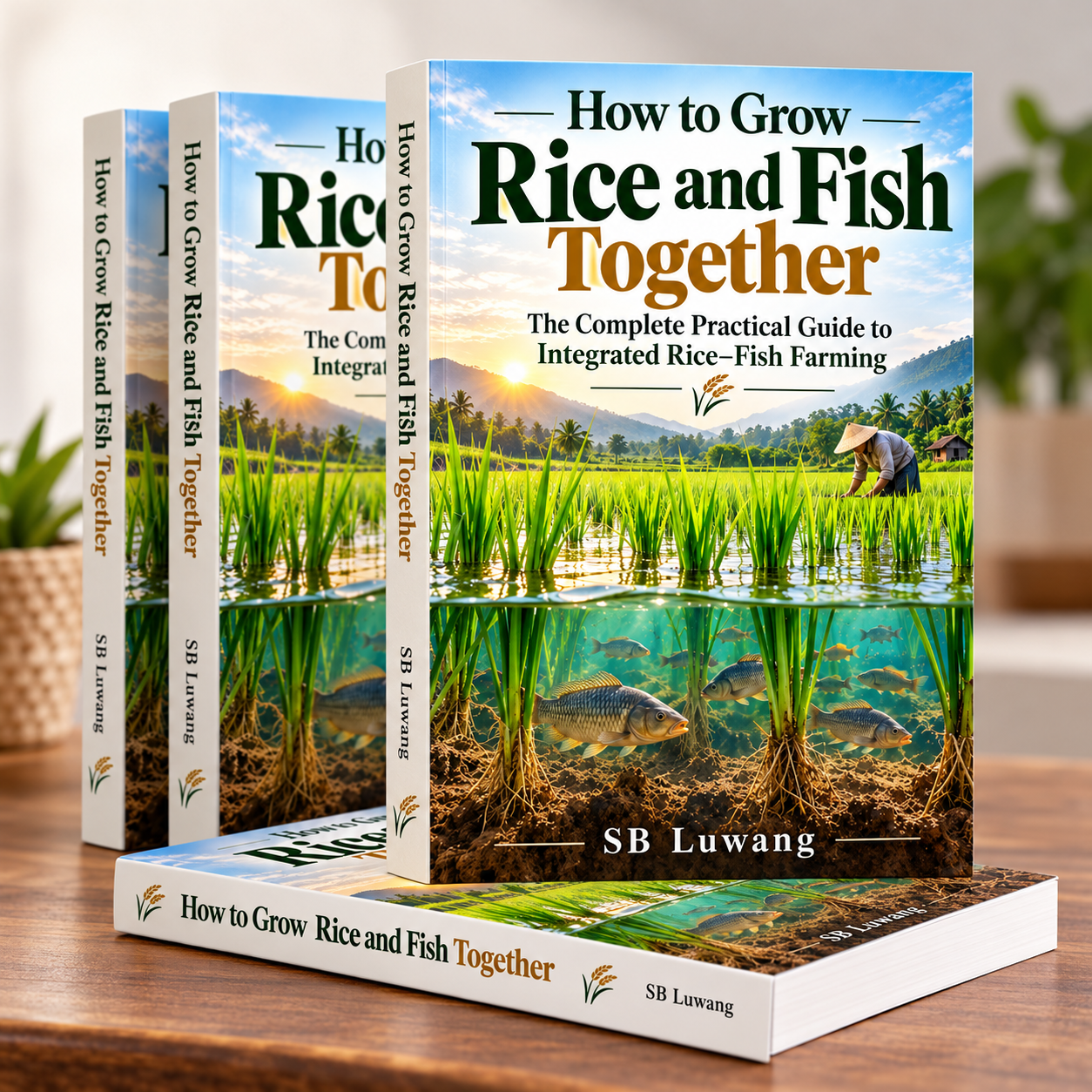
How to Grow Rice and Fish Together
The Complete Practical Guide to Integrated Rice–Fish Farming
Author: SB Luwang
One Field. Two Harvests. A Smarter Way to Farm.
What if your rice field could produce more than just rice?
Integrated rice–fish farming is a traditional yet increasingly relevant agricultural practice that combines rice cultivation with freshwater fish production. By making productive use of the same land and water resources, farmers can diversify their harvests, support ecological balance, and explore additional income opportunities.
How to Grow Rice and Fish Together is a comprehensive, practical guide designed to help readers understand, establish, manage, and improve their own rice–fish farming systems.
From selecting suitable land and constructing fish refuges to choosing fish species, managing water quality, and calculating farm expenses, this book explains the entire process in accessible language.
What You Will Learn
- Integrated Rice–Fish Farming Fundamentals: Understand how rice and fish coexist and support each other within a shared agricultural ecosystem.
- Farm Planning and Construction: Learn how to select land, strengthen paddy bunds, construct fish trenches, and install water-management structures.
- Rice Cultivation: Explore suitable rice varieties, nursery preparation, transplanting, fertilization, and crop management.
- Fish Selection and Stocking: Understand freshwater fish species, fingerling quality, stocking strategies, feeding, and fish health.
- Water and Pest Management: Learn practical approaches to maintaining water conditions, managing pests, and reducing risks to fish.
- Harvesting and Post-Harvest Handling: Discover methods for harvesting, handling, and storing rice and fish.
- Farm Economics: Calculate establishment expenses, operational costs, expected revenues, cash flow, and break-even points using illustrative examples.
- Climate-Resilient Farming: Prepare for flooding, drought, water shortages, and changing environmental conditions.
- Farm Expansion: Follow practical plans for a 500 m² demonstration farm and a one-acre farming enterprise.
Special Features
This comprehensive agricultural handbook includes:
- 48 detailed chapters across 12 major sections
- 12 practical appendices
- Field-layout diagrams and explanatory illustrations
- Step-by-step farm establishment guidance
- Worked calculations and sample farm budgets
- Fish stocking and feeding worksheets
- Water-quality and crop-monitoring registers
- Harvesting and financial record templates
- Regional farming examples from India, China, and Southeast Asia
- Practical checklists and troubleshooting guides
Who Should Read This Book?
This book is particularly useful for:
- Small and marginal farmers
- Rice cultivators interested in fish farming
- Freshwater fish farmers
- Agricultural and fisheries students
- Rural entrepreneurs and farming startups
- Agricultural extension workers and trainers
- Sustainable agriculture enthusiasts
- Researchers and community farming organizations
Why Choose Integrated Rice–Fish Farming?
An appropriately designed rice–fish farming system may help farmers diversify production, make better use of available water and land, support natural nutrient cycling, and reduce dependence on certain crop-management inputs.
Results depend on climate, field conditions, fish species, water availability, management practices, and market access. This book helps readers evaluate these factors before investing.
Book Details
- Title: How to Grow Rice and Fish Together
- Subtitle: The Complete Practical Guide to Integrated Rice–Fish Farming
- Author: SB Luwang
- Language: English
- Category: Agriculture / Aquaculture / Sustainable Farming
- Format: Paperback
- Trim Size: 6 × 9 inches
- Interior: Black-and-white text, diagrams, tables, and worksheets
Start Your Integrated Farming Journey
Whether you are experimenting with a small demonstration plot or planning a larger agricultural enterprise, this handbook offers a structured introduction to combining rice cultivation and freshwater fish production.
Grow rice. Raise fish. Make every field work smarter.
Note: Farming recommendations should be adapted to local environmental conditions, applicable regulations, and advice from qualified agricultural and fisheries professionals.


Reviews
There are no reviews yet.