- +91-9774991814
- Usha Cinema Hall, Paoana Bazar, Imphal
- 9 AM - 6 PM

3-Month Human Resources (HR) Certificate Course
Categories: CERTIFICATE COURSE
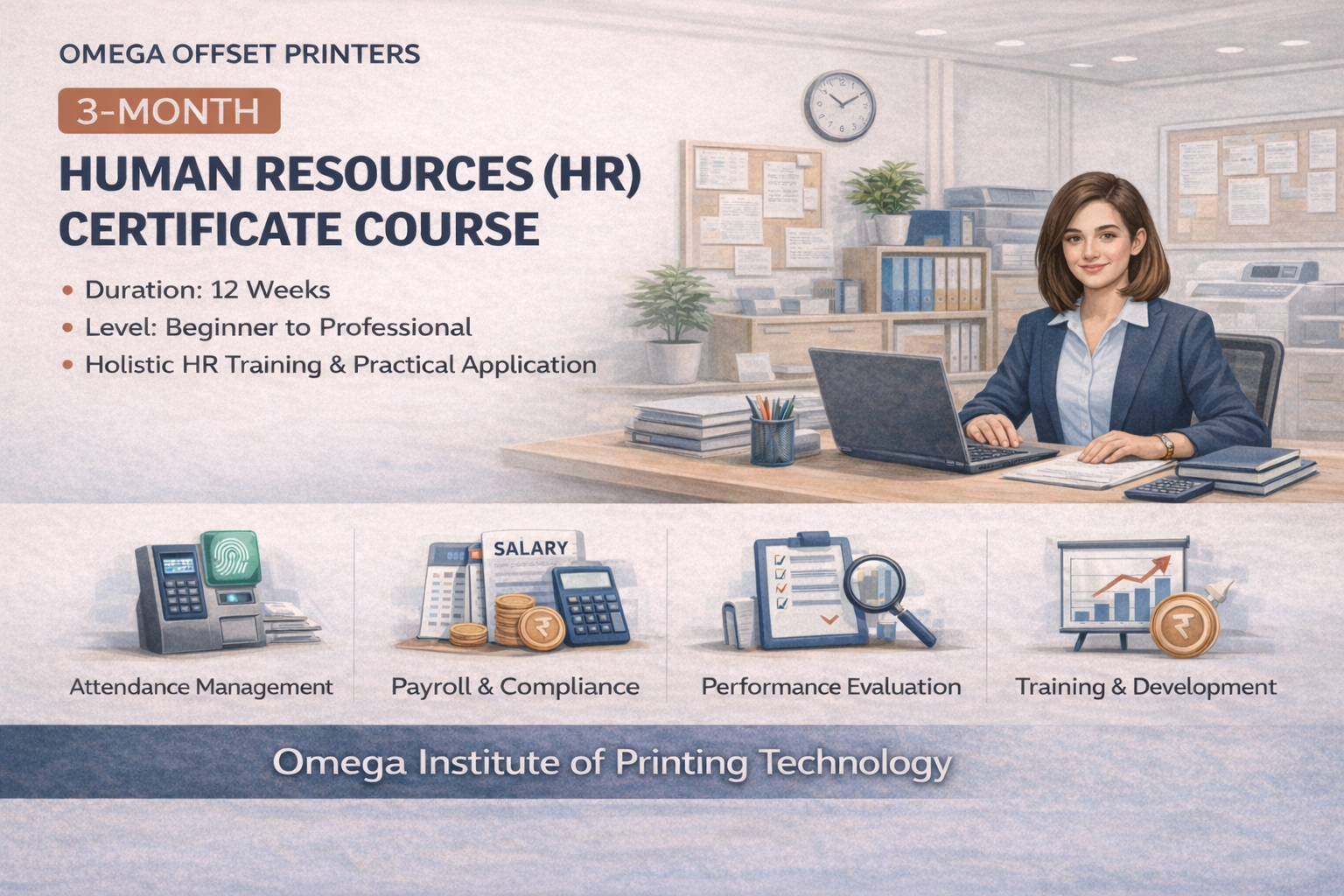
About Course
This 12-week practical HR Certificate Course is specially designed for the printing and production industry environment. The program trains students in complete Human Resource Management systems including recruitment, payroll, labour compliance, performance evaluation, workplace discipline, safety management, and digital HR analytics.
The course combines classroom learning with real-world industrial case studies from a live printing and signage production setup. Participants gain hands-on exposure to attendance systems, payroll processing, compliance documentation, and HR digital tools.
By the end of the course, trainees will be capable of independently managing HR operations in manufacturing, printing presses, production units, and small-to-medium enterprises.
What Will You Learn?
- Foundations of Human Resource Management
- Organizational Structure & Workforce Planning
- Recruitment & Selection Systems
- Employee Documentation & Onboarding
- Attendance & Shift Management
- Payroll Processing & Salary Structuring
- PF, ESI & Labour Law Compliance (Indian Context)
- Performance Management System (KPI Design)
- Training & Skill Development Planning
- Discipline & Conflict Resolution
- Workplace Safety & Risk Management
- Digital HR Systems & HR Analytics
- Strategic HR Planning for Business Growth
Course Content
CHAPTER 1: Introduction to Human Resource Management
-
1.1 Introduction
-
1.2 Meaning of Human Resource Management
-
1.3 Importance of HR in a Printing & Production Industry
-
1.4 Evolution of HR Management
-
1.5 Objectives of HR Management
-
1.6 Core Functions of HR
-
1.7 HR Roles in Omega Offset Printers
-
1.8 Difference Between HR in Office vs Manufacturing
-
1.9 HR as a Strategic Partner
-
1.10 Ethical Responsibilities of HR
-
1.11 HR Challenges in Printing Industry
-
1.12 Qualities of a Good HR Professional
-
1.13 Practical Case Study
-
1.14 Practical Exercise
-
1.15 Chapter Summary
CHAPTER 2: Organizational Structure of Omega Offset Printers
-
2.1 Introduction
-
2.2 Meaning of Organizational Structure
-
2.3 Types of Organizational Structures
-
2.4 Proposed Organizational Structure for Omega Offset Printers
-
2.5 Production Department Structure
-
2.6 Design & Prepress Department
-
2.7 Signage & UV Division
-
2.8 Accounts & Finance Department
-
2.9 HR & Administration Department
-
2.10 Sales & Client Relations
-
2.11 Logistics & Installation Unit
-
2.12 Span of Control
-
2.13 Authority & Responsibility Relationship
-
2.14 Line & Staff Relationship
-
2.15 Workflow Coordination Between Departments
-
2.16 Organizational Chart (Text Representation)
-
2.17 Common Structural Problems in Printing Industry
-
2.18 Importance of Clear Job Descriptions
-
2.19 Structural Planning for Future Expansion
-
2.20 Practical Case Study
-
2.21 Practical Exercise
-
2.22 Chapter Summary
CHAPTER 3: HR Planning & Workforce Forecasting
-
3.1 Introduction
-
3.2 Meaning of HR Planning
-
3.3 Objectives of HR Planning
-
3.4 Importance of Workforce Forecasting in Printing Industry
-
3.5 Steps in HR Planning Process
-
3.6 Manpower Planning for Each Department
-
3.7 Seasonal Workforce Planning
-
3.8 Productivity-Based Forecasting
-
3.9 Skill-Based Forecasting
-
3.10 Succession Planning
-
3.11 Cost Control in Workforce Planning
-
3.12 Technology & Automation Impact
-
3.13 Common Workforce Planning Mistakes
-
3.14 Practical Workforce Planning Model for Omega Offset Printers
-
3.15 HR Planning for Expansion
-
3.16 Workforce Analytics & HR Dashboard
-
3.17 Case Study
-
3.18 Practical Exercises
-
3.19 Chapter Summary
CHAPTER 4: Recruitment & Selection
-
4.1 Introduction
-
4.2 Meaning of Recruitment
-
4.3 Objectives of Recruitment & Selection
-
4.4 Types of Recruitment
-
4.5 Recruitment Process (Step-by-Step System)
-
4.6 Selection Criteria for Different Departments
-
4.7 Probation Policy
-
4.8 Common Recruitment Mistakes in Printing Industry
-
4.9 Recruitment Cost Analysis
-
4.10 Reducing Employee Turnover
-
4.11 Ethical Recruitment Practices
-
4.12 Case Study
-
4.13 Practical Assignments
-
4.14 Recruitment Workflow
-
4.15 Chapter Summary
CHAPTER 5: Employee Documentation & Onboarding
-
5.1 Introduction
-
5.2 Meaning of Employee Documentation
-
5.3 Objectives of Proper Documentation
-
5.4 Employee Personal File System
-
5.5 Types of Employment Documents
-
5.6 Digital vs Physical Documentation
-
5.7 Onboarding Meaning
-
5.8 Objectives of Onboarding
-
5.9 Onboarding Process (Step-by-Step)
-
5.10 Code of Conduct
-
5.11 Compliance Requirements (Indian Context)
-
5.12 Common Documentation Mistakes
-
5.13 Importance of Confidentiality
-
5.14 Exit Documentation
-
5.15 Case Study
-
5.16 Practical Assignments
-
5.17 Chapter Summary
CHAPTER 6: Employee Confirmation & Exit Management
-
6.1 Introduction
-
6.2 Meaning of Employee Confirmation
-
6.3 Probation Period Policy
-
6.4 Objectives of Probation Monitoring
-
6.5 Probation Evaluation System
-
6.6 Confirmation Decision Process
-
6.7 Confirmation Letter Contents
-
6.8 Importance of Employee Retention
-
6.9 Retention Strategies in Printing Industry
-
6.10 Meaning of Exit Management
-
6.11 Resignation Process
-
6.12 Notice Period Policy
-
6.13 Handover Procedure
-
6.14 Full & Final Settlement (F&F)
-
6.15 Experience Certificate
-
6.16 Termination Policy
-
6.17 Absconding Employees
-
6.18 Exit Interview
-
6.19 Legal Compliance During Exit
-
6.20 Common Exit Management Mistakes
-
6.21 Case Study
-
6.22 Practical Assignments
-
6.23 Chapter Summary
CHAPTER 7: Attendance & Shift Management
-
7.1 Introduction
-
7.2 Meaning of Attendance Management
-
7.3 Importance of Attendance System in Printing Industry
-
7.4 Types of Attendance Systems
-
7.5 Working Hours Policy
-
7.6 Shift Management
-
7.7 Shift Allocation Principles
-
7.8 Overtime Management
-
7.9 Overtime Approval System
-
7.10 Leave Management System
-
7.11 Weekly Off & Public Holidays
-
7.12 Absenteeism Management
-
7.13 Late Coming Policy
-
7.14 Attendance & Payroll Integration
-
7.15 Productivity & Time Efficiency
-
7.16 Shift Planning During Peak Season
-
7.17 Health & Safety Considerations in Shift Work
-
7.18 Attendance Reporting & Analytics
-
7.19 Common Attendance Management Mistakes
-
7.20 Case Study
-
7.21 Practical Assignments
-
7.22 Chapter Summary
CHAPTER 8: Payroll Management
-
8.1 Introduction
-
8.2 Meaning of Payroll
-
8.3 Objectives of Payroll Management
-
8.4 Types of Salary Structure
-
8.5 Components of Salary Structure
-
8.6 Designing Salary Structure (Example)
-
8.7 Overtime Calculation
-
8.8 Leave Deduction Calculation
-
8.9 Payroll Processing Cycle
-
8.10 Statutory Compliance in Payroll (Indian Context)
-
8.11 Provident Fund (PF)
-
8.12 Employee State Insurance (ESI)
-
8.13 Bonus & Incentive System
-
8.14 Payroll Record Maintenance
-
8.15 Payroll Software vs Manual System
-
8.16 Confidentiality in Payroll
-
8.17 Common Payroll Errors
-
8.18 Payroll Cost Control
-
8.19 Case Study
-
8.20 Practical Assignments
-
8.21 Chapter Summary
CHAPTER 9: Labour Laws & Statutory Compliance
-
9.1 Introduction
-
9.2 Meaning of Statutory Compliance
-
9.3 Objectives of Labour Law Compliance
-
9.4 Major Labour Laws Applicable (Indian Context)
-
9.5 Minimum Wages Act
-
9.6 Payment of Wages Act
-
9.7 Employees’ Provident Fund (EPF) Act
-
9.8 Employees’ State Insurance (ESI) Act
-
9.9 Payment of Bonus Act
-
9.10 Shops & Establishments Act
-
9.11 Factories Act (If Applicable)
-
9.12 Industrial Disputes Act
-
9.13 Working Hours & Overtime Compliance
-
9.14 Maintenance of Statutory Registers
-
9.15 Compliance Calendar
-
9.16 Workplace Safety Compliance
-
9.17 Grievance Redressal Mechanism
-
9.18 Consequences of Non-Compliance
-
9.19 Role of HR in Compliance Management
-
9.20 Common Compliance Mistakes
-
9.21 Case Study
-
9.22 Practical Assignments
-
9.23 Chapter Summary
CHAPTER 10: Performance Management System (PMS)
-
10.1 Introduction
-
10.2 Meaning of Performance Management
-
10.3 Objectives of PMS in Printing Industry
-
10.4 Difference Between Performance Appraisal & Performance Management
-
10.5 Key Components of Performance Management System
-
10.6 Setting Performance Goals
-
10.7 Department-Wise KPI Design
-
10.8 Performance Measurement Methods
-
10.9 Performance Review Frequency
-
10.10 Performance Rating System (Example)
-
10.11 Performance Appraisal Process
-
10.12 Linking Performance with Incentives
-
10.13 Underperformance Handling
-
10.14 Performance Improvement Plan (PIP)
-
10.15 360-Degree Feedback (Optional for Senior Roles)
-
10.16 Common PMS Mistakes
-
10.17 Performance Documentation
-
10.18 Performance Analytics
-
10.19 Case Study
-
10.20 Practical Assignments
-
10.21 Chapter Summary
CHAPTER 11: Training & Skill Development
-
11.1 Introduction
-
11.2 Meaning of Training
-
11.3 Objectives of Training in Omega Offset Printers
-
11.4 Types of Training
-
11.5 Need for Training (Training Need Analysis – TNA)
-
11.6 Methods of Training
-
11.7 Training Planning Process
-
11.8 Training Evaluation
-
11.9 Multi-Skilling Strategy
-
11.10 Training Budgeting
-
11.11 Induction Training
-
11.12 Skill Upgradation & Technology Changes
-
11.13 Training Records Maintenance
-
11.14 Building Internal Trainers
-
11.15 Career Development Path
-
11.16 Common Training Mistakes
-
11.17 Case Study
-
11.18 Practical Assignments
-
11.19 Chapter Summary
CHAPTER 12: Discipline & Conflict Management
-
12.1 Introduction
-
12.2 Meaning of Workplace Discipline
-
12.3 Objectives of Discipline Management
-
12.4 Types of Workplace Misconduct
-
12.5 Code of Conduct
-
12.6 Principles of Disciplinary Action
-
12.7 Progressive Discipline System
-
12.8 Verbal Warning
-
12.9 Written Warning
-
12.10 Show Cause Notice
-
12.11 Domestic Inquiry (For Serious Cases)
-
12.12 Suspension Policy
-
12.13 Termination Procedure
-
12.14 Conflict in Workplace
-
12.15 Types of Conflict
-
12.16 Conflict Resolution Methods
-
12.17 Grievance Redressal Mechanism
-
12.18 Preventive Discipline
-
12.19 Workplace Ethics & Professionalism
-
12.20 Role of Supervisors in Discipline
-
12.21 Documentation Importance
-
12.22 Case Study
-
12.23 Practical Assignments
-
12.24 Chapter Summary
CHAPTER 13: Health, Safety & Industrial Risk Management
-
13.1 Introduction
-
13.2 Meaning of Workplace Health & Safety
-
13.3 Objectives of Safety Management
-
13.4 Types of Hazards in Printing Industry
-
13.5 Safety Responsibilities
-
13.6 Personal Protective Equipment (PPE)
-
13.7 Fire Safety Management
-
13.8 Electrical Safety Protocol
-
13.9 Machine Safety Procedures
-
13.10 Chemical Handling Guidelines
-
13.11 Accident Reporting System
-
13.12 Risk Assessment Process
-
13.13 Safety Training Program
-
13.14 Emergency Response Plan
-
13.15 Health Monitoring
-
13.16 Industrial Insurance & Compensation
-
13.17 Safety Committee Formation
-
13.18 Safety Documentation
-
13.19 Common Safety Mistakes
-
13.20 Risk Management Strategy
-
13.21 Business Continuity Planning
-
13.22 Case Study
-
13.23 Practical Assignments
-
13.24 Chapter Summary
CHAPTER 14: Digital HR Systems & HR Analytics
-
14.1 Introduction
-
14.2 Meaning of Digital HR
-
14.3 Objectives of Digital HR System
-
14.4 Core Components of Digital HR System
-
14.5 Employee Database Management
-
14.6 Attendance & Payroll Integration
-
14.7 Leave Management System
-
14.8 Payroll Software System
-
14.9 Performance Tracking Dashboard
-
14.10 HR Analytics – Meaning
-
14.11 Key HR Metrics (KPIs for HR Department)
-
14.12 Data-Driven Decision Making
-
14.13 Security & Data Protection
-
14.14 HR Digital Implementation Roadmap
-
14.15 Cloud-Based vs Local HR Systems
-
14.16 Automation in Recruitment
-
14.17 Digital Compliance Tracking
-
14.18 HR Reports for Management
-
14.19 Common Mistakes in Digital HR
-
14.20 Case Study
-
14.21 Practical Assignments
-
14.22 Chapter Summary
CHAPTER 15: Strategic HR Planning & Organizational Growth
-
15.1 Introduction
-
15.2 Meaning of Strategic HR Planning
-
15.3 HR as a Strategic Partner
-
15.4 Linking HR Strategy with Business Strategy
-
15.5 Organizational Growth Stages
-
15.6 Workforce Forecasting for Expansion
-
15.7 Leadership Development Planning
-
15.8 Succession Planning Strategy
-
15.9 HR Budget Planning
-
15.10 Culture Building for Growth
-
15.11 Performance-Based Growth Model
-
15.12 Workforce Diversification
-
15.13 Automation & Future Skills
-
15.14 Employer Branding
-
15.15 Employee Engagement for Long-Term Growth
-
15.16 Risk Management in Expansion
-
15.17 HR Strategic Metrics
-
15.18 Five-Year HR Roadmap Example
-
15.19 Case Study
-
15.20 Practical Assignments
-
15.21 Final Chapter Summary
Student Ratings & Reviews

No Review Yet