- +91-9774991814
- Usha Cinema Hall, Paoana Bazar, Imphal
- 9 AM - 6 PM
Certificate Course in DTF Printing Technology
Categories: CERTIFICATE COURSE
About Course
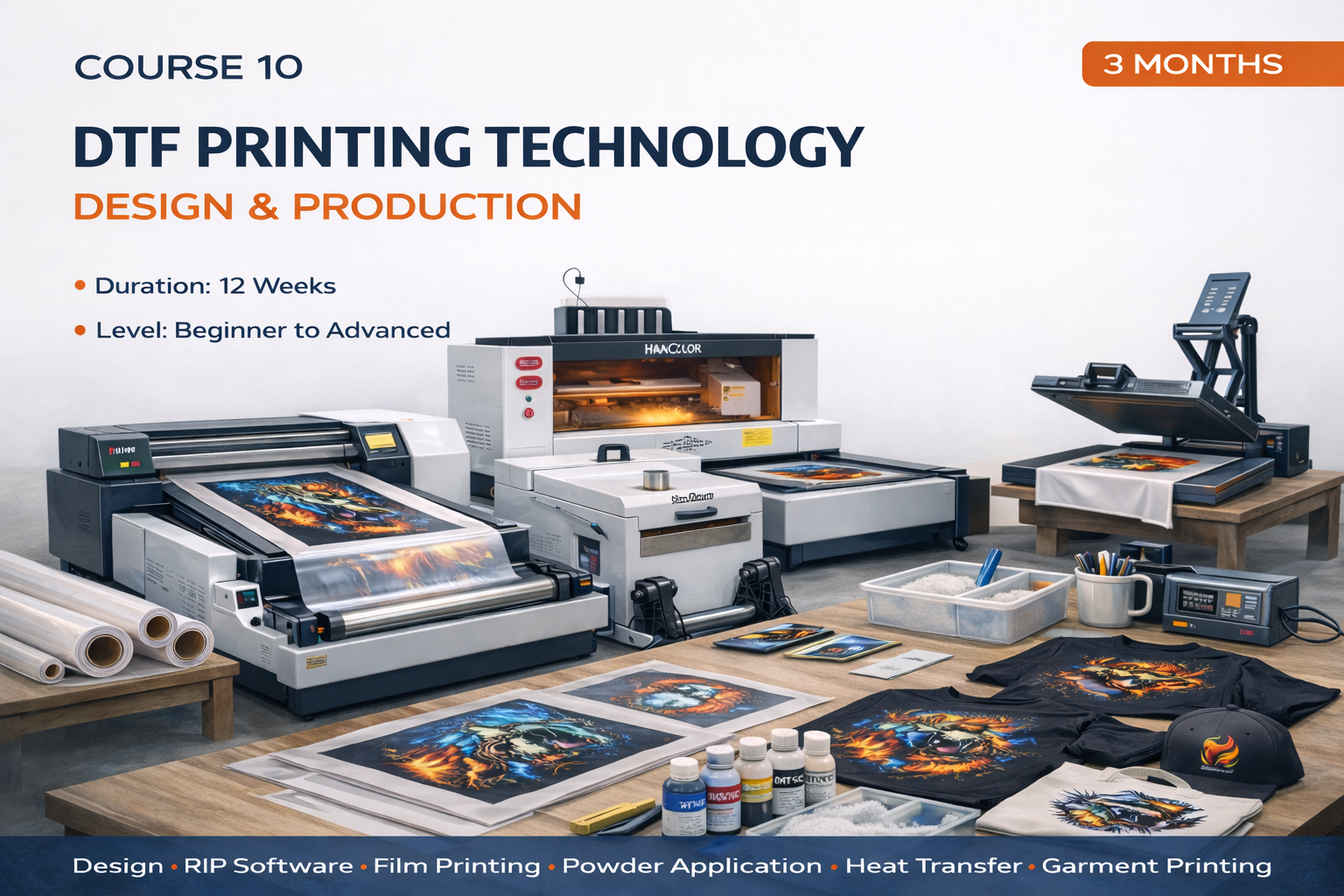
Direct-to-Film (DTF) printing is one of the fastest growing textile printing technologies. It allows high-quality, full-color prints to be transferred onto various fabrics such as cotton, polyester, nylon, leather, and blended materials.
This course provides complete training in DTF printing technology, machine operation, artwork preparation, color management, production workflow, maintenance, and business applications. Students will gain practical skills required to start a DTF printing unit or work in a professional printing environment.
The course is designed with a strong focus on real production practices used in modern printing industries such as Omega Offset Printers.
What Will You Learn?
- Fundamentals of textile printing technologies
- Working principles of DTF printing
- DTF printers, films, inks, and adhesive powders
- Artwork preparation for garment printing
- Color profiles and RIP software usage
- Film printing and powder application techniques
- Heat transfer and curing methods
- Quality control and troubleshooting
- Machine maintenance and production management
- Business opportunities in DTF printing
Course Content
Chapter 1 Introduction to Textile Printing
-
1.1 Introduction
-
1.2 What is Textile Printing?
-
1.3 Importance of Textile Printing Industry
-
1.4 Types of Textile Printing Methods
-
1.5 Growth of Digital Textile Printing
-
1.6 Applications of Textile Printing
-
1.7 Textile Printing in the Modern Printing Industry
-
1.8 Future of Textile Printing
-
1.9 Summary
Chapter 2 Evolution of DTF Printing Technology
-
2.1 Introduction
-
2.2 Early Textile Printing Methods
-
2.3 Rise of Digital Textile Printing
-
2.4 Direct-to-Garment (DTG) Printing
-
2.5 Development of Sublimation Printing
-
2.6 Emergence of DTF Printing Technology
-
2.7 Rapid Growth of DTF Printing
-
2.8 DTF Printing in Modern Printing Businesses
-
2.9 Technological Improvements in DTF Printing
-
2.10 Future of DTF Printing
-
2.11 Summary
Chapter 3 DTF Printing Workflow
-
3.1 Introduction
-
3.2 Overview of the DTF Printing Process
-
3.3 Artwork Preparation
-
3.4 RIP Software Processing
-
3.5 Printing on PET Film
-
3.6 Adhesive Powder Application
-
3.7 Powder Curing
-
3.8 Heat Transfer Process
-
3.9 Final Press and Finishing
-
3.10 Quality Inspection
-
3.11 Advantages of the DTF Workflow
-
3.12 Safety and Handling
-
3.13 Summary
Chapter 4 DTF Printing Machines
-
4.1 Introduction
-
4.2 Types of DTF Printing Machines
-
4.3 Components of a DTF Printer
-
4.4 Powder Shaker Machine
-
4.5 Curing Machine
-
4.6 Heat Press Machine
-
4.7 DTF Printing Machine Setup
-
4.8 Environmental Requirements
-
4.9 Advantages of Modern DTF Machines
-
4.10 Summary
Chapter 5 DTF Films, Inks, and Adhesive Powders
-
5.1 Introduction
-
5.2 PET Transfer Film
-
5.3 Textile Pigment Inks
-
5.4 Hot-Melt Adhesive Powder
-
5.5 Powder Application Process
-
5.6 Powder Curing
-
5.7 Material Compatibility with Fabrics
-
5.8 Factors Affecting Material Performance
-
5.9 Material Storage and Shelf Life
-
5.10 Summary
Chapter 6 Graphic Design for DTF Printing
-
6.1 Introduction
-
6.2 Importance of Design in DTF Printing
-
6.3 Graphic Design Software for DTF Printing
-
6.4 Raster vs Vector Graphics
-
6.5 Image Resolution
-
6.6 Transparent Background Designs
-
6.7 Color Mode for DTF Printing
-
6.8 Design Size and Placement
-
6.9 Removing Backgrounds
-
6.10 Preparing Artwork for RIP Software
-
6.11 Common Design Mistakes
-
6.12 Design Creativity in Garment Printing
-
6.13 Summary
Chapter 7 RIP Software and Color Management in DTF Printing
-
7.1 Introduction
-
7.2 What is RIP Software?
-
7.3 Role of RIP Software in DTF Printing
-
7.4 Common RIP Software Used in DTF Printing
-
7.5 Understanding White Ink Layer
-
7.6 Color Management in DTF Printing
-
7.7 Layout and Nesting
-
7.8 Ink Density and Print Settings
-
7.9 RIP Workflow in DTF Printing
-
7.10 Troubleshooting RIP Issues
-
7.11 Best Practices for RIP Software Use
-
7.12 Summary
Chapter 8 Printing on DTF Film
-
8.1 Introduction
-
8.2 Preparing the Printer Before Printing
-
8.3 Loading PET Film
-
8.4 Printable Side of PET Film
-
8.5 Printing Process
-
8.6 Print Resolution Settings
-
8.7 Pass Settings
-
8.8 Ink Flow Control
-
8.9 Handling Printed Film
-
8.10 Environmental Conditions
-
8.11 Common Printing Problems
-
8.12 Quality Inspection
-
8.13 Best Practices for Film Printing
-
8.14 Summary
Chapter 9 Powder Application and Curing in DTF Printing
-
9.1 Introduction
-
9.2 Role of Adhesive Powder
-
9.3 Types of DTF Adhesive Powder
-
9.4 Manual Powder Application
-
9.5 Automatic Powder Shaker Machines
-
9.6 Powder Coating Principles
-
9.7 Curing Process
-
9.8 Curing Methods
-
9.9 Curing Temperature and Time
-
9.10 Signs of Proper Curing
-
9.11 Common Powder and Curing Problems
-
9.12 Safety Precautions
-
9.13 Best Practices for Powder Application
-
9.14 Summary
Chapter 10 Heat Transfer Process in DTF Printing
-
10.1 Introduction
-
10.2 Heat Press Machine
-
10.3 Types of Heat Press Machines
-
10.4 Preparing the Garment
-
10.5 Positioning the Transfer Film
-
10.6 Heat Transfer Settings
-
10.7 Peeling the Film
-
10.8 Second Press (Post Press)
-
10.9 Fabric Compatibility
-
10.10 Checking the Final Print
-
10.11 Common Heat Transfer Problems
-
10.12 Care Instructions for Printed Garments
-
10.13 Safety Precautions
-
10.14 Summary
Chapter 11 Fabric Types and Compatibility in DTF Printing
-
11.1 Introduction
-
11.2 Importance of Fabric Compatibility
-
11.3 Cotton Fabrics
-
11.4 Polyester Fabrics
-
11.5 Cotton-Polyester Blends
-
11.6 Denim Fabrics
-
11.7 Nylon Fabrics
-
11.8 Leather and Synthetic Leather
-
11.9 Fabric Texture and Surface
-
11.10 Fabric Color Considerations
-
11.11 Fabric Pre-Treatment
-
11.12 Testing Fabric Compatibility
-
11.13 Common Fabric Printing Problems
-
11.14 Best Practices for Fabric Printing
-
11.15 Summary
Chapter 12 Quality Control and Troubleshooting in DTF Printing
-
12.1 Introduction
-
12.2 Importance of Quality Control
-
12.3 Stages of Quality Inspection
-
12.4 Common Printing Defects
-
12.5 Adhesion Problems
-
12.6 Film Handling Problems
-
12.7 Heat Transfer Problems
-
12.8 Preventive Maintenance
-
12.9 Record Keeping in Quality Control
-
12.10 Operator Skills in Quality Control
-
12.11 Best Practices for Quality Printing
-
12.12 Summary
Chapter 13 DTF Printer Maintenance and Servicing
-
13.1 Introduction
-
13.2 Importance of Printer Maintenance
-
13.3 Daily Maintenance
-
13.4 Weekly Maintenance
-
13.5 Monthly Maintenance
-
13.6 Print Head Care
-
13.7 Ink System Maintenance
-
13.8 Film Feeding System Maintenance
-
13.9 Environmental Maintenance
-
13.10 Storage and Shutdown Procedures
-
13.11 Common Maintenance Problems
-
13.12 Spare Parts and Replacement
-
13.13 Maintenance Record Keeping
-
13.14 Best Maintenance Practices
-
13.15 Summary
Chapter 14 Production Management in DTF Printing
-
14.1 Introduction
-
14.2 Importance of Production Management
-
14.3 Production Workflow Planning
-
14.4 Job Scheduling
-
14.5 Material Management
-
14.6 Production Cost Control
-
14.7 Batch Production
-
14.8 Workflow Organization
-
14.9 Worker Roles in Production
-
14.10 Time Management
-
14.11 Production Safety
-
14.12 Waste Reduction
-
14.13 Production Record Keeping
-
14.14 Scaling Production
-
14.15 Summary
Chapter 15 Starting a DTF Printing Business
-
15.1 Introduction
-
15.2 Business Opportunities in DTF Printing
-
15.3 Required Equipment
-
15.4 Basic Investment Requirements
-
15.5 Workspace Setup
-
15.6 Material Supply
-
15.7 Pricing and Cost Calculation
-
15.8 Marketing Strategies
-
15.9 Customer Service
-
15.10 Business Expansion Opportunities
-
15.11 Online Custom Printing Services
-
15.12 Quality and Brand Reputation
-
15.13 Challenges in DTF Printing Business
-
15.14 Future of DTF Printing Businesses
-
15.15 Summary
Student Ratings & Reviews

No Review Yet