- +91-9774991814
- Usha Cinema Hall, Paoana Bazar, Imphal
- 9 AM - 6 PM

Certificate Course in Signage Design, Fabrication & Marketing
Categories: CERTIFICATE COURSE
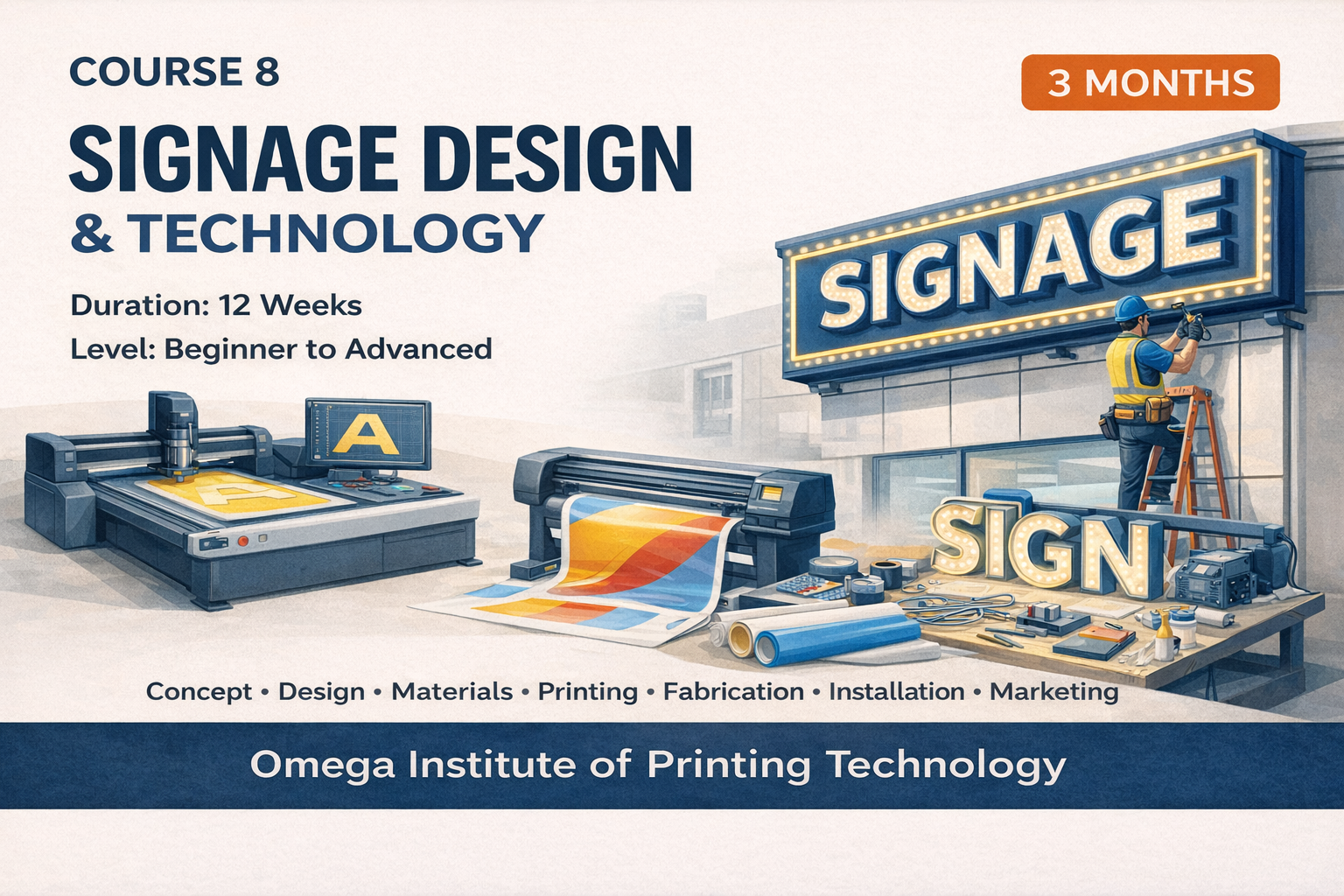
About Course
This 3-month professional course provides comprehensive training in the concept, design, production, fabrication, installation, and marketing of modern signage systems. Students will learn how signage functions as an essential tool for branding, advertising, navigation, and architectural communication.
The course covers the full workflow of signage production including design principles, materials, printing technologies, CNC fabrication, LED lighting, installation planning, cost estimation, and business development. Through theoretical lessons and practical demonstrations, learners will gain the knowledge required to work in the signage, advertising, printing, and branding industries.
By the end of the course, students will be able to design professional signage systems, select suitable materials, operate production processes, and develop signage business opportunities.
What Will You Learn?
- Fundamentals of signage and visual communication
- Types of signage used in commercial and architectural environments
- Signage design principles and layout planning
- Signage materials such as acrylic, ACP, vinyl, flex, and metals
- Digital printing, UV printing, vinyl cutting, and screen printing
- CNC routing, laser cutting, and signage fabrication techniques
- LED lighting and illuminated signage systems
- Signage installation methods and site planning
- Legal regulations and safety standards in signage
- Branding strategies and retail signage marketing
- Cost estimation and quotation preparation
- Signage business development and client management
Course Content
Chapter 1 Introduction to the Signage Industry
-
1.1 What is Signage?
-
1.2 Importance of Signage in Modern Society
-
1.3 History and Evolution of Signage
-
1.4 Signage as Visual Communication
-
1.5 Elements of Effective Signage
-
1.6 Role of Signage in Branding
-
1.7 Types of Signage Applications
-
1.8 Signage Industry and Economic Opportunities
-
1.9 Signage and Urban Landscape
-
1.10 Future of the Signage Industry
-
Chapter Summary
-
Review Questions
Chapter 2 Types of Signage
-
2.1 Introduction
-
2.2 Commercial Signage
-
2.3 Retail Signage
-
2.4 Corporate Signage
-
2.5 Directional Signage
-
2.6 Informational Signage
-
2.7 Safety Signage
-
2.8 Outdoor Advertising Signage
-
2.9 Indoor Signage
-
2.10 Digital Signage
-
2.11 Temporary Signage
-
2.12 Architectural Signage
-
2.13 Environmental Signage
-
2.14 Vehicle Signage
-
2.15 Importance of Selecting the Right Signage Type
-
Chapter Summary
-
Review Questions
Chapter 3 Principles of Signage Design
-
3.1 Introduction
-
3.2 Clarity of Message
-
3.3 Simplicity in Design
-
3.4 Visibility
-
3.5 Readability and Legibility
-
3.6 Typography in Signage
-
3.7 Color Psychology and Color Contrast
-
3.8 Use of Symbols and Icons
-
3.9 Size and Viewing Distance
-
3.10 Layout and Visual Hierarchy
-
3.11 Placement and Positioning
-
3.12 Lighting and Illumination
-
3.13 Consistency and Branding
-
3.14 Environmental Considerations
-
3.15 Common Mistakes in Signage Design
-
Chapter Summary
-
Review Questions
Chapter 4 Signage Concept Development
-
4.1 Introduction
-
4.2 Understanding the Purpose of the Sign
-
4.3 Understanding the Target Audience
-
4.4 Analyzing the Installation Environment
-
4.5 Brainstorming Ideas
-
4.6 Creating Concept Sketches
-
4.7 Integrating Branding Elements
-
4.8 Developing the Visual Style
-
4.9 Creating Digital Design Prototypes
-
4.10 Evaluating the Design Concept
-
4.11 Collaboration with Other Professionals
-
4.12 From Concept to Production
-
4.13 Importance of Concept Development in Professional Signage
-
Chapter Summary
-
Review Questions
Chapter 5 Signage Materials and Substrates
-
5.1 Introduction
-
5.2 Factors Influencing Material Selection
-
5.3 Acrylic
-
5.4 Aluminium Composite Panel (ACP)
-
5.5 Vinyl
-
5.6 Flex Banner Material
-
5.7 Metal Signage Materials
-
5.8 Wood Signage
-
5.9 Glass Signage
-
5.10 LED Components in Signage
-
5.11 Foam Board
-
5.12 Corrugated Plastic Sheets
-
5.13 Fabric Signage
-
5.14 Sustainable Signage Materials
-
5.15 Importance of Proper Material Selection
-
Chapter Summary
-
Review Questions
Chapter 6 Signage Printing Technologies
-
6.1 Introduction
-
6.2 Digital Printing
-
6.3 Large Format Printing
-
6.4 Solvent Printing
-
6.5 Eco-Solvent Printing
-
6.6 UV Printing
-
6.7 Sublimation Printing
-
6.8 Screen Printing
-
6.9 Vinyl Cutting and Plotting
-
6.10 Reflective Printing
-
6.11 Laser Engraving and Etching
-
6.12 Choosing the Right Printing Technology
-
6.13 Integration of Multiple Technologies
-
Chapter Summary
-
Review Questions
Chapter 7 Signage Fabrication Techniques
-
7.1 Introduction
-
7.2 Basic Fabrication Workflow
-
7.3 CNC Routing
-
7.4 Laser Cutting
-
7.5 Channel Letter Fabrication
-
7.6 LED Lighting Installation
-
7.7 Welding and Metal Fabrication
-
7.8 Acrylic Bending and Forming
-
7.9 Vinyl Application Techniques
-
7.10 Light Box Fabrication
-
7.11 Mounting and Structural Supports
-
7.12 Safety in Signage Fabrication
-
7.13 Quality Control in Fabrication
-
Chapter Summary
-
Review Questions
Chapter 8: Architectural Integration of Signage
-
8.1 Introduction
-
8.2 Importance of Architectural Signage
-
8.3 Signage Planning in Architectural Design
-
8.4 Wayfinding Systems
-
8.5 Types of Architectural Signage
-
8.6 Signage Placement and Visibility
-
8.7 Materials for Architectural Signage
-
8.8 Integration with Interior Design
-
8.9 Accessibility and Universal Design
-
8.10 Lighting in Architectural Signage
-
8.11 Signage in Large Complexes
-
8.12 Signage and Urban Design
-
8.13 Collaboration Between Professionals
-
Chapter Summary
-
Review Questions
Chapter 9 Lighting and Illumination in Signage
-
9.1 Introduction
-
9.2 Importance of Lighting in Signage
-
9.3 Types of Signage Illumination
-
9.4 LED Lighting Technology
-
9.5 Backlit Signage
-
9.6 Edge-Lit Signage
-
9.7 Halo-Lit Signage
-
9.8 Front-Lit Channel Letters
-
9.9 Neon Lighting
-
9.10 Light Boxes
-
9.11 Digital LED Displays
-
9.12 Energy Efficiency and Sustainability
-
9.13 Safety Considerations in Signage Lighting
-
9.14 Maintenance of Illuminated Signage
-
Chapter Summary
-
Review Questions
Chapter 10 Signage Installation and Site Planning
-
10.1 Introduction
-
10.2 Importance of Site Planning
-
10.3 Site Survey and Inspection
-
10.4 Measurement and Layout Planning
-
10.5 Structural Considerations
-
10.6 Mounting Methods
-
10.7 Installation of Illuminated Signage
-
10.8 Alignment and Positioning
-
10.9 Weather Protection for Outdoor Signage
-
10.10 Safety During Installation
-
10.11 Testing and Final Inspection
-
10.12 Maintenance Considerations
-
10.13 Documentation and Client Approval
-
Chapter Summary
-
Review Questions
Chapter 11 Signage Regulations and Legal Standards
-
11.1 Introduction
-
11.2 Purpose of Signage Regulations
-
11.3 Local Authority Permissions
-
11.4 Size and Height Restrictions
-
11.5 Location Restrictions
-
11.6 Lighting Regulations
-
11.7 Structural Safety Standards
-
11.8 Electrical Safety Regulations
-
11.9 Advertising Content Regulations
-
11.10 Environmental Considerations
-
11.11 Maintenance and Inspection Requirements
-
11.12 Penalties for Non-Compliance
-
11.13 Role of Signage Professionals
-
Chapter Summary
-
Review Questions
Chapter 12 Signage for Branding and Retail Marketing
-
12.1 Introduction
-
12.2 Role of Signage in Branding
-
12.3 Storefront Signage
-
12.4 Window Display Signage
-
12.5 Promotional Signage
-
12.6 Point-of-Sale Signage
-
12.7 Interior Branding Signage
-
12.8 Digital Signage in Retail
-
12.9 Color Psychology in Retail Signage
-
12.10 Typography and Messaging
-
12.11 Seasonal and Event Signage
-
12.12 Customer Attraction Strategies
-
12.13 Consistency in Brand Communication
-
12.14 Measuring the Effectiveness of Signage
-
Chapter Summary
-
Review Questions
Chapter 13 Cost Estimation and Project Management in Signage
-
13.1 Introduction
-
13.2 Importance of Cost Estimation
-
13.3 Components of Signage Cost
-
13.4 Methods of Cost Estimation
-
13.5 Preparing a Professional Quotation
-
13.6 Budget Management
-
13.7 Project Planning
-
13.8 Project Scheduling
-
13.9 Resource Management
-
13.10 Risk Management
-
13.11 Communication with Clients
-
13.12 Quality Control in Project Management
-
Chapter Summary
-
Review Questions
Chapter 14 Marketing and Business Development in the Signage Industry
-
14.1 Introduction
-
14.2 Understanding the Signage Market
-
14.3 Identifying Target Customers
-
14.4 Building a Strong Brand Identity
-
14.5 Creating a Professional Portfolio
-
14.6 Online Marketing Strategies
-
14.7 Offline Marketing Strategies
-
14.8 Building Client Relationships
-
14.9 Strategic Partnerships
-
14.10 Competitive Pricing Strategies
-
14.11 Expanding Service Offerings
-
14.12 Customer Service and Reputation Management
-
14.13 Innovation and Technology Adoption
-
Chapter Summary
-
Review Questions
Chapter 15 Future Trends in the Signage Industry
-
15.1 Introduction
-
15.2 Digital Signage Revolution
-
15.3 Interactive Signage Systems
-
15.4 Artificial Intelligence in Signage
-
15.5 Smart Signage and Internet of Things (IoT)
-
15.6 Augmented Reality Signage
-
15.7 Sustainable Signage Materials
-
15.8 Energy-Efficient Signage Technologies
-
15.9 Personalized Advertising Displays
-
15.10 Flexible and Transparent Displays
-
15.11 Integration with Mobile Technology
-
15.12 Global Growth of the Signage Industry
-
15.13 Skills for Future Signage Professionals
-
Chapter Summary
-
Review Questions
Student Ratings & Reviews

No Review Yet