- +91-9774991814
- Usha Cinema Hall, Paoana Bazar, Imphal
- 9 AM - 6 PM

Certificate in Printing & Signage Marketing (CPSM)
Categories: CERTIFICATE COURSE
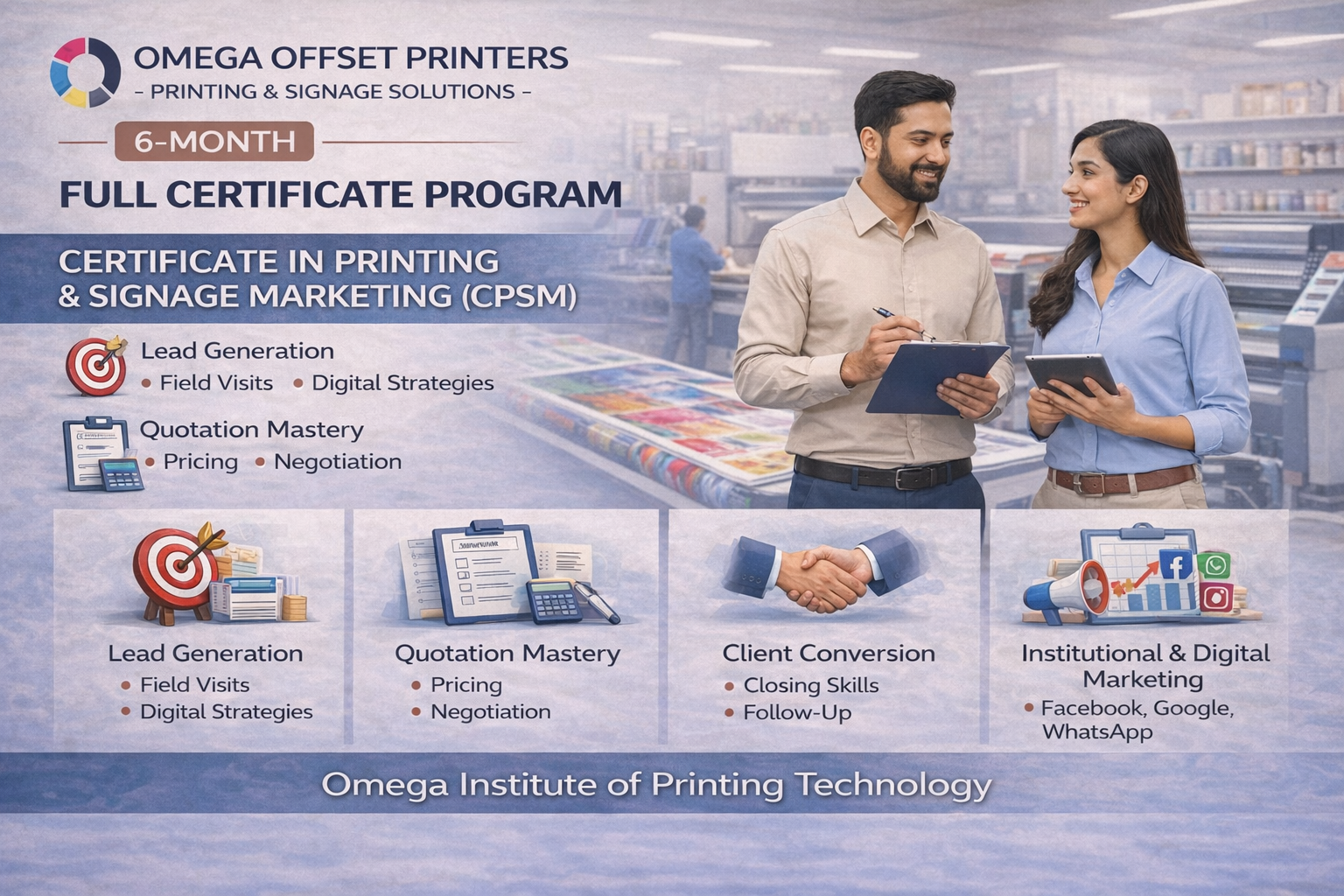
About Course
The Certificate in Printing & Signage Marketing (CPSM) is a comprehensive industry-oriented program designed to train marketing professionals specifically for the printing, packaging, signage, and branding industry.
This program combines:
• Practical field marketing
• Institutional sales strategy
• Government tender marketing
• Digital marketing techniques
• Quotation & pricing mastery
• Client conversion techniques
• Branding & positioning strategy
Participants gain real-world exposure within a professional printing and signage environment, making them industry-ready from day one.
What Will You Learn?
- Understand offset, digital, UV, signage & packaging business
- Generate high-value leads (field + digital)
- Prepare professional, profitable quotations
- Master negotiation & closing techniques
- Handle objections confidently
- Secure institutional & government contracts
- Use WhatsApp, Google & social media for marketing
- Track performance, improve conversion & increase revenue
Course Content
CHAPTER 1: INTRODUCTION TO MARKETING IN THE PRINTING & SIGNAGE INDUSTRY
-
1.1 What is Marketing?
-
1.2 Difference Between Sales and Marketing
-
1.3 Evolution of Marketing in Printing Industry
-
1.4 Understanding the Printing & Signage Market in Manipur
-
1.5 Core Marketing Concepts
-
1.6 Types of Marketing Relevant to Omega
-
1.7 Marketing Mix for Omega Offset Printers
-
1.8 Role of a Marketing Executive at Omega
-
1.9 Ethics in Marketing
-
1.10 Marketing Funnel in Printing Industry
-
1.11 Practical Example – Complete Marketing Case Study
-
1.12 Marketing vs Advertising
-
1.13 Long-Term Vision for Omega Marketing
-
1.14 Skills Required for Successful Printing Marketer
-
1.15 Chapter Summary
-
1.16 Assignment
CHAPTER 2: UNDERSTANDING OMEGA OFFSET PRINTERS BUSINESS MODEL
-
2.1 Introduction to Business Model
-
2.2 Overview of Omega Offset Printers
-
2.3 Core Revenue Streams
-
2.4 Branch Structure & Operational Strength
-
2.5 Cost Structure Understanding
-
2.6 Value Chain of Omega
-
2.7 Competitive Advantage of Omega
-
2.8 Customer Segments & Revenue Model
-
2.9 Revenue Stability Strategy
-
2.10 Seasonal Business Patterns
-
2.11 Branding Identity of Omega
-
2.12 SWOT Analysis of Omega
-
2.13 Growth Strategy for Next 5 Years
-
2.14 Role of Marketing in Business Expansion
-
2.15 Chapter Summary
-
2.16 Assignment
CHAPTER 3: PRINTING PRODUCTS & PROFIT MARGINS
-
3.1 Introduction
-
3.2 Understanding Profit Margin
-
3.3 Types of Costs in Printing Industry
-
3.4 Product Category Classification at Omega
-
3.5 High Margin Products
-
3.6 Medium Margin Products
-
3.7 Low Margin – High Volume Products
-
3.8 Understanding Contribution Margin
-
3.9 Product Life Cycle in Printing
-
3.10 Pricing Strategy for Omega
-
3.11 Common Pricing Mistakes
-
3.12 Profit-Oriented Sales Strategy
-
3.13 Case Study – Profit Comparison
-
3.14 Strategic Product Focus for Omega
-
3.15 Chapter Summary
-
3.16 Assignment
CHAPTER 4: IDENTIFYING TARGET CUSTOMERS
-
4.1 Introduction
-
4.2 What is a Target Customer?
-
4.3 Customer Segmentation for Omega
-
4.4 Segment 1 – Educational Institutions
-
4.5 Segment 2 – Government Departments
-
4.6 Segment 3 – Hospitals & Healthcare
-
4.7 Segment 4 – Retail & Commercial Businesses
-
4.8 Segment 5 – Packaging & Manufacturing Clients
-
4.9 Identifying High-Value Customers
-
4.10 Customer Qualification Process
-
4.11 Geographic Targeting
-
4.12 Decision Makers in B2B Printing
-
4.13 Lead Database Creation
-
4.14 Customer Lifetime Value (CLV)
-
4.15 Prioritization Strategy
-
4.16 Chapter Summary
-
4.17 Assignment
CHAPTER 5: CUSTOMER PSYCHOLOGY IN B2B PRINTING
-
5.1 Introduction
-
5.2 What is Customer Psychology?
-
5.3 Types of B2B Customers in Printing Industry
-
5.4 The 5 Psychological Drivers of B2B Printing Buyers
-
5.5 Decision-Making Process in B2B Printing
-
5.6 Understanding Decision Makers vs Influencers
-
5.7 Emotional Triggers in Printing Sales
-
5.8 Handling Price Objection Psychologically
-
5.9 The Psychology of First Impression
-
5.10 Building Trust in First Meeting
-
5.11 Psychological Selling Techniques
-
5.12 Long-Term Psychological Positioning
-
5.13 Handling Difficult Customers
-
5.14 Case Study
-
5.15 Chapter Summary
-
5.16 Assignment
CHAPTER 6: COMMUNICATION SKILLS FOR MARKETING EXECUTIVES
-
6.1 Introduction
-
6.2 What is Professional Communication?
-
6.3 The 4 Types of Communication in Marketing
-
6.4 Face-to-Face Communication
-
6.5 The Perfect Introduction Script (Omega Context)
-
6.6 Body Language Mastery
-
6.7 Active Listening Skills
-
6.8 Questioning Techniques
-
6.9 Phone Communication Skills
-
6.10 WhatsApp & Digital Communication
-
6.11 Email Communication Structure
-
6.12 Presentation Skills
-
6.13 Handling Objections through Communication
-
6.14 Confidence Building Techniques
-
6.15 Negotiation Communication
-
6.16 Handling Difficult Situations
-
6.17 Communication Ethics
-
6.18 Multilingual Advantage
-
6.19 Communication Funnel in Sales
-
6.20 Follow-Up Communication Strategy
-
6.21 Communication Mistakes to Avoid
-
6.22 Chapter Summary
-
6.23 Practical Exercise
CHAPTER 7: LEAD GENERATION STRATEGIES
-
7.1 Introduction
-
7.2 What is a Lead?
-
7.3 Lead Generation Funnel
-
7.4 Offline Lead Generation Strategies
-
7.5 Online Lead Generation Strategies
-
7.6 Database Creation & Management
-
7.7 Cold Calling Strategy
-
7.8 Seasonal Lead Planning
-
7.9 Lead Qualification
-
7.10 Daily Lead Generation Discipline
-
7.11 Conversion Ratio Understanding
-
7.12 Lead Nurturing Strategy
-
7.13 Mistakes in Lead Generation
-
7.14 Strategic Lead Focus for Omega
-
7.15 Chapter Summary
-
7.16 Assignment
CHAPTER 8: PREPARING EFFECTIVE RATE QUOTATIONS
-
8.1 Introduction
-
8.2 What is a Rate Quotation?
-
8.3 Objectives of a Good Quotation
-
8.4 Components of a Professional Quotation
-
8.5 Understanding Product Specification Before Quoting
-
8.6 Cost Calculation Formula (Printing Context)
-
8.7 Quotation for Offset Printing (Example Structure)
-
8.8 Quotation for UV & Signage Products
-
8.9 Quotation for Corrugated Packaging
-
8.10 Pricing Strategies in Quotation
-
8.11 Avoiding Underquoting
-
8.12 GST Consideration
-
8.13 Payment Terms in Quotation
-
8.14 Delivery Timeline Commitment
-
8.15 Follow-Up After Quotation
-
8.16 Negotiation During Quotation Stage
-
8.17 Common Quotation Errors
-
8.18 Psychological Presentation of Quotation
-
8.19 Case Study
-
8.20 Strategic Quotation Focus for Omega
-
8.21 Chapter Summary
-
8.22 Assignment
CHAPTER 9: CLOSING TECHNIQUES IN PRINTING & SIGNAGE SALES
-
9.1 Introduction
-
9.2 What is Closing?
-
9.3 Why Clients Delay Decisions
-
9.4 The 6 Stages Before Closing
-
9.5 Types of Closing Techniques
-
9.6 Closing Strategies for Different Customer Types
-
9.7 Psychological Principles in Closing
-
9.8 Handling “Let Me Think” Response
-
9.9 Handling “Your Price is High”
-
9.10 Closing Large Institutional Orders
-
9.11 Signs That Client Is Ready to Close
-
9.12 Advance Collection Strategy
-
9.13 Follow-Up Closing Strategy
-
9.14 Common Closing Mistakes
-
9.15 Case Study – School Admission Printing
-
9.16 Strategic Closing Focus for Omega
-
9.17 Chapter Summary
-
9.18 Assignment
CHAPTER 10: HANDLING OBJECTIONS IN PRINTING & SIGNAGE SALES
-
10.1 Introduction
-
10.2 Why Clients Raise Objections
-
10.3 Types of Objections in Printing Industry
-
10.4 Price Objection
-
10.5 Quality Objection
-
10.6 Timing Objection
-
10.7 Authority Objection
-
10.8 Trust Objection
-
10.9 The 5-Step Objection Handling Model
-
10.10 Advanced Objection Handling Techniques
-
10.11 Objections Specific to Printing Industry
-
10.12 Emotional Control During Objections
-
10.13 When to Walk Away
-
10.14 Case Study – Government Tender Objection
-
10.15 Turning Objections into Upselling Opportunities
-
10.16 Objection Handling in Packaging Clients
-
10.17 Strategic Objection Planning for Omega
-
10.18 Chapter Summary
-
10.19 Assignment
CHAPTER 11: GOVERNMENT & TENDER MARKETING
-
11.1 Introduction
-
11.2 What is Government Marketing?
-
11.3 Types of Government Procurement
-
11.4 Understanding Tender Documents
-
11.5 Important Documents for Government Work
-
11.6 GEM Portal Basics
-
11.7 Steps to Participate in Tender
-
11.8 Pricing Strategy for Government Tenders
-
11.9 Technical vs Financial Bid
-
11.10 EMD (Earnest Money Deposit)
-
11.11 Common Tender Mistakes
-
11.12 Building Government Relationships
-
11.13 Payment Cycle in Government Work
-
11.14 Risk Management in Government Work
-
11.15 Government Marketing Opportunities for Omega
-
11.16 Seasonal Government Opportunities
-
11.17 Case Study – Bulk Register Printing
-
11.18 Ethical Conduct in Government Marketing
-
11.19 Strategic Government Growth Plan for Omega
-
11.20 Chapter Summary
-
11.21 Assignment
CHAPTER 12: INSTITUTIONAL RELATIONSHIP MARKETING
-
12.1 Introduction
-
12.2 What is Institutional Relationship Marketing?
-
12.3 Key Institutional Segments for Omega
-
12.4 Educational Institutions
-
12.5 Hospitals & Healthcare Institutions
-
12.6 NGOs & Trust Organizations
-
12.7 Corporate & Commercial Institutions
-
12.8 Why Institutional Clients Are Important
-
12.9 Customer Lifetime Value (CLV)
-
12.10 Relationship Building Process
-
12.11 Annual Contract Strategy
-
12.12 Service Excellence as Relationship Tool
-
12.13 Relationship Maintenance Strategy
-
12.14 Handling Institutional Complaints
-
12.15 Cross-Selling Within Institutions
-
12.16 Institutional Data Management
-
12.17 Risk Management in Institutional Marketing
-
12.18 Strategic Institutional Growth Plan for Omega
-
12.19 Case Study – School Annual Contract
-
12.20 Chapter Summary
-
12.21 Assignment
CHAPTER 13: DIGITAL MARKETING FOR THE PRINTING INDUSTRY
-
13.1 Introduction
-
13.2 What is Digital Marketing?
-
13.3 Google Business Profile Optimization
-
13.4 Facebook Marketing Strategy
-
13.5 Instagram Marketing
-
13.6 WhatsApp Business Marketing
-
13.7 Email Marketing for Institutions
-
13.8 Website Presence
-
13.9 Content Marketing Strategy
-
13.10 Online Lead Capture Strategy
-
13.11 Digital Advertising Strategy
-
13.12 Managing Online Reputation
-
13.13 Digital Funnel for Omega
-
13.14 Video Marketing Advantage
-
13.15 Measuring Digital Performance
-
13.16 Common Digital Marketing Mistakes
-
13.17 Digital Branding Strategy for Omega
-
13.18 Strategic Digital Focus for Omega
-
13.19 Case Study – Packaging Client Through Facebook
-
13.20 Chapter Summary
-
13.21 Assignment
CHAPTER 14: BRANDING STRATEGY FOR OMEGA OFFSET PRINTERS
-
14.1 Introduction
-
14.2 What is Branding?
-
14.3 Omega Brand Identity
-
14.4 Brand Pillars of Omega
-
14.5 Visual Branding Elements
-
14.6 Brand Positioning Strategy
-
14.7 Brand Differentiation
-
14.8 Internal Branding
-
14.9 Customer Experience Branding
-
14.10 Brand Consistency in Digital Marketing
-
14.11 Reputation Management Strategy
-
14.12 Premium Branding Strategy for High-Margin Products
-
14.13 Brand Storytelling
-
14.14 Brand Expansion Strategy
-
14.15 Brand Protection Strategy
-
14.16 Emotional Branding in B2B
-
14.17 Branding Through Packaging
-
14.18 Case Study – Brand vs Price Competition
-
14.19 Long-Term Brand Vision for Omega
-
14.20 Chapter Summary
-
14.21 Assignment
CHAPTER 15: MARKETING REPORTING & PERFORMANCE INDEX
-
15.1 Introduction
-
15.2 Why Marketing Reporting is Important
-
15.3 Daily Marketing Report Format
-
15.4 Weekly Performance Review
-
15.5 Monthly KPI (Key Performance Indicators)
-
15.6 Conversion Rate Formula
-
15.7 Average Order Value (AOV)
-
15.8 Sector-Wise Revenue Tracking
-
15.9 Performance Index System
-
15.10 Revenue Target Planning
-
15.11 Payment Collection Tracking
-
15.12 Lead Source Analysis
-
15.13 Identifying Weak Performance Areas
-
15.14 Branch-Level Performance Monitoring
-
15.15 Annual Growth Planning
-
15.16 Incentive & Motivation System
-
15.17 Strategic Growth Vision
-
15.18 Common Reporting Mistakes
-
15.19 Case Study – Improving Conversion
-
15.20 Final Chapter Summary
-
15.21 Final Practical Assignment
Student Ratings & Reviews

No Review Yet