
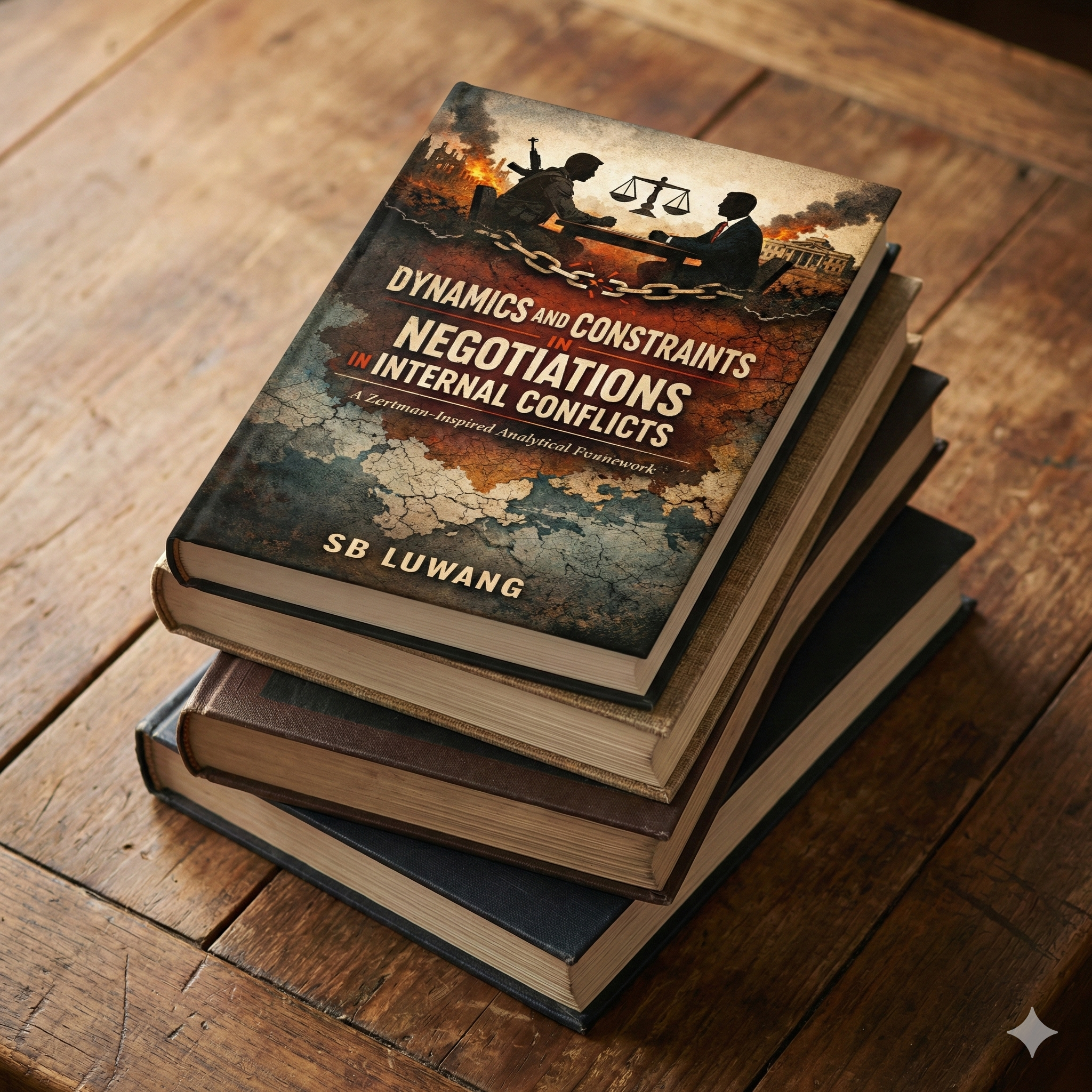
Internal conflicts are among the most complex and enduring challenges in modern politics. From civil wars and insurgencies to separatist struggles and state–society confrontations, these conflicts reshape nations and test the limits of diplomacy.
In Dynamics and Constraints in Negotiations in Internal Conflicts, SB Luwang presents a rigorous and forward-looking analytical framework inspired by the negotiation theory of William Zartman. The book explores why some conflicts become negotiable while others persist for decades, examining the structural conditions that make peace possible.
This volume systematically analyzes:
• The concept of ripeness and mutually hurting stalemate
• Power asymmetry between states and non-state actors
• Identity, legitimacy, and recognition struggles
• The role of third-party mediators
• Spoilers and fragmentation within movements
• Institutional and political constraints
• Timing and windows of opportunity
• Negotiation architecture and implementation design
Blending theory with real-world case illustrations, this book provides a comprehensive guide for scholars, diplomats, policymakers, peace practitioners, and students of conflict resolution.
Rather than viewing negotiations as moral choices, this work presents them as strategic outcomes shaped by structural necessity, perception, and timing. It offers both analytical depth and practical insights into designing sustainable peace processes.
A timely and intellectually grounded contribution to the study of internal conflict resolution.



Reviews
There are no reviews yet.