
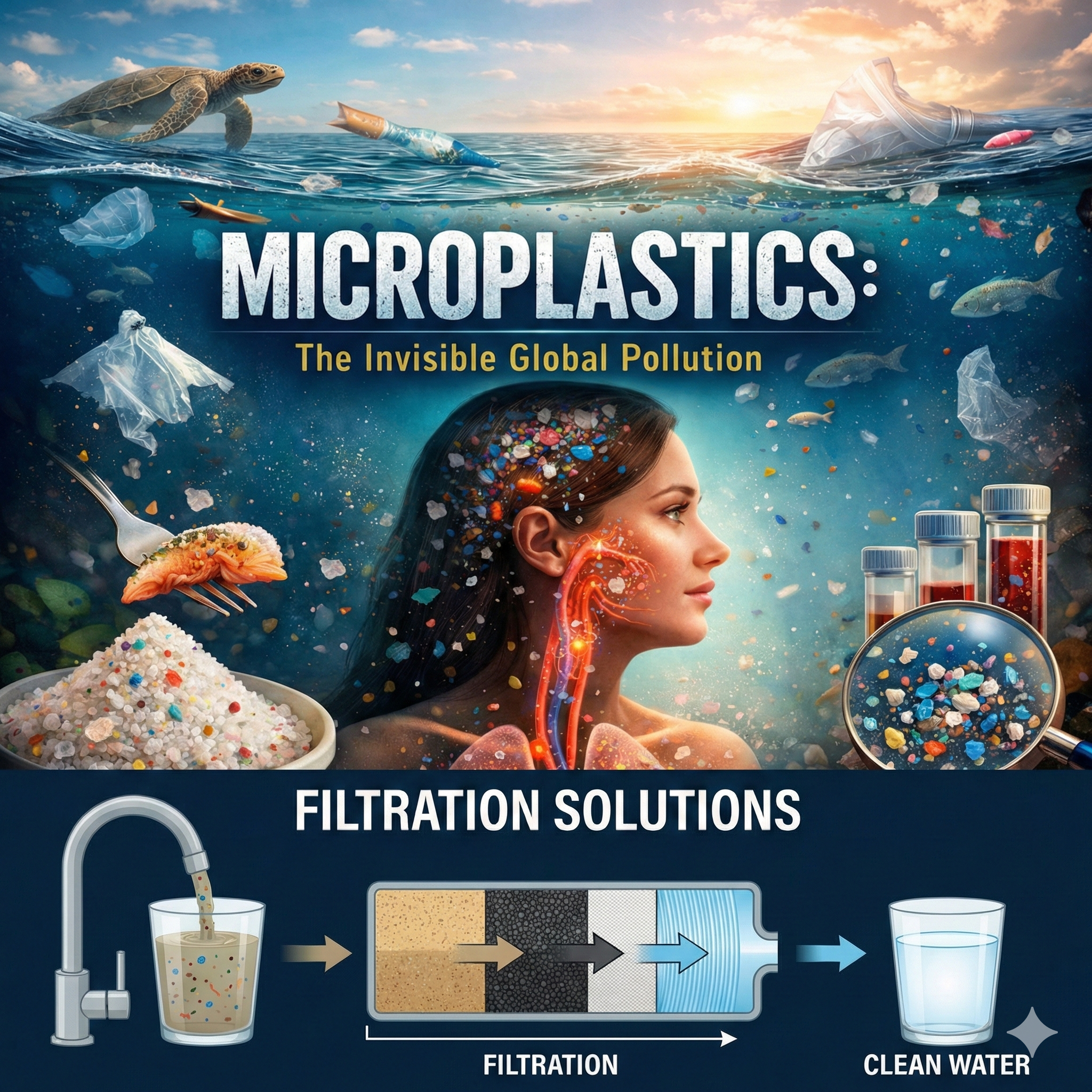
Microplastics are no longer confined to landfills or floating ocean garbage patches. They are present in rivers, drinking water, agricultural soil, seafood, packaged food, and even in the air we breathe. Recent scientific studies have detected microplastic particles in human blood, lungs, and placental tissue—raising urgent questions about long-term health impacts.
Microplastics: The Invisible Global Pollution Crisis offers a comprehensive, research-based exploration of how microscopic plastic particles have become embedded in ecosystems and human biology. The book explains the science behind microplastics, examines their environmental and medical implications, and evaluates global policy responses and sustainable technological solutions.
Inside this book, you will discover:
• The origin and evolution of plastic production
• The difference between primary and secondary microplastics
• How plastics fragment into microplastics and nanoplastics
• Pathways through oceans, freshwater, soil, and atmosphere
• Bioaccumulation in marine life and entry into the food chain
• Scientific evidence linking microplastics to inflammation and toxicity
• Economic impacts on fisheries, tourism, and public health systems
• Global regulations and India’s plastic waste management policies
• Innovations in biodegradable materials and circular economy models
Written in clear, accessible language while maintaining academic depth, this book is ideal for environmental science students, civil services and competitive exam aspirants, policymakers, sustainability professionals, and informed readers who want to understand one of the defining environmental challenges of the 21st century.
The plastic era transformed modern life.
The microplastic era is transforming our planet—and potentially, ourselves.




Reviews
There are no reviews yet.