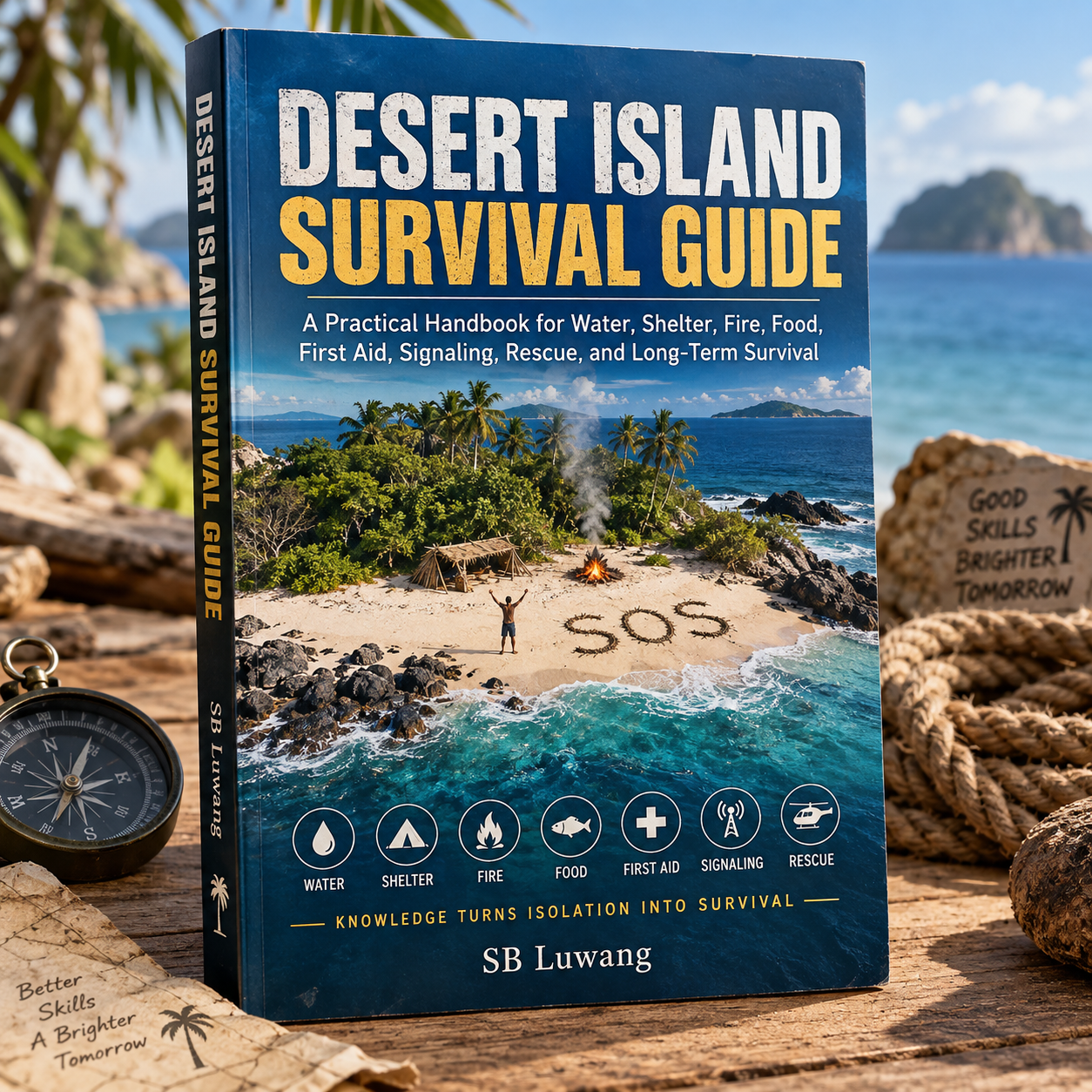
Survive First. Get Rescued Second. Become Comfortable Third.
Being stranded on an isolated island is not mainly a test of strength.
It is a test of priorities.
Desert Island Survival Guide teaches readers how to make practical survival decisions when water, shelter, medical care, communication, and rescue are uncertain.
Written in a clear field-guide style, the book begins with the most important period of any emergency—the first ten minutes, first hour, and first 24 hours—before progressing into long-term survival planning.
Inside the Book
Readers will learn about:
- Immediate survival priorities after becoming stranded
- The STOP method: Stop, Think, Observe, Plan
- Assessing injuries and immediate environmental hazards
- Understanding coral, volcanic, mangrove, tropical, and temperate islands
- Reading tides, terrain, weather, vegetation, and drainage
- Finding and collecting freshwater
- Rainwater harvesting techniques
- Making questionable water safer
- Choosing a safe campsite
- Building emergency shelters
- Organizing an efficient survival camp
- Fire preparation, ignition, and safety
- Understanding survival food priorities
- Coastal food and plant safety
- Low-risk fishing and food gathering
- Creating large visible rescue signals
- Aircraft and boat signaling
- Deciding whether to stay on the island or leave
- First aid for cuts, burns, bleeding, dehydration, heat illness, and injuries
- Mental resilience and survival routines
Practical Checklists & Reference Material
The book also includes:
- First Ten Minutes Checklist
- First 24 Hours Checklist
- Seven-Day Survival Plan
- Daily Camp Checklist
- Water Safety Reference
- Rescue Signal Reference
- First-Aid Quick Reference
- Weather Observation Log
- Tide Observation Log
- Survival Inventory Sheet
- Island Resource Mapping Sheet
A Survival Guide for Ordinary People
You do not need military training or advanced bushcraft experience to understand this book.
The techniques are explained in straightforward language with an emphasis on:
Safety • Efficiency • Water • Shelter • Rescue • Risk Reduction
The central lesson is simple:
Do not make the situation worse.
Every decision should preserve energy, protect essential resources, reduce injury risk, and improve the chance of being found.



Reviews
There are no reviews yet.