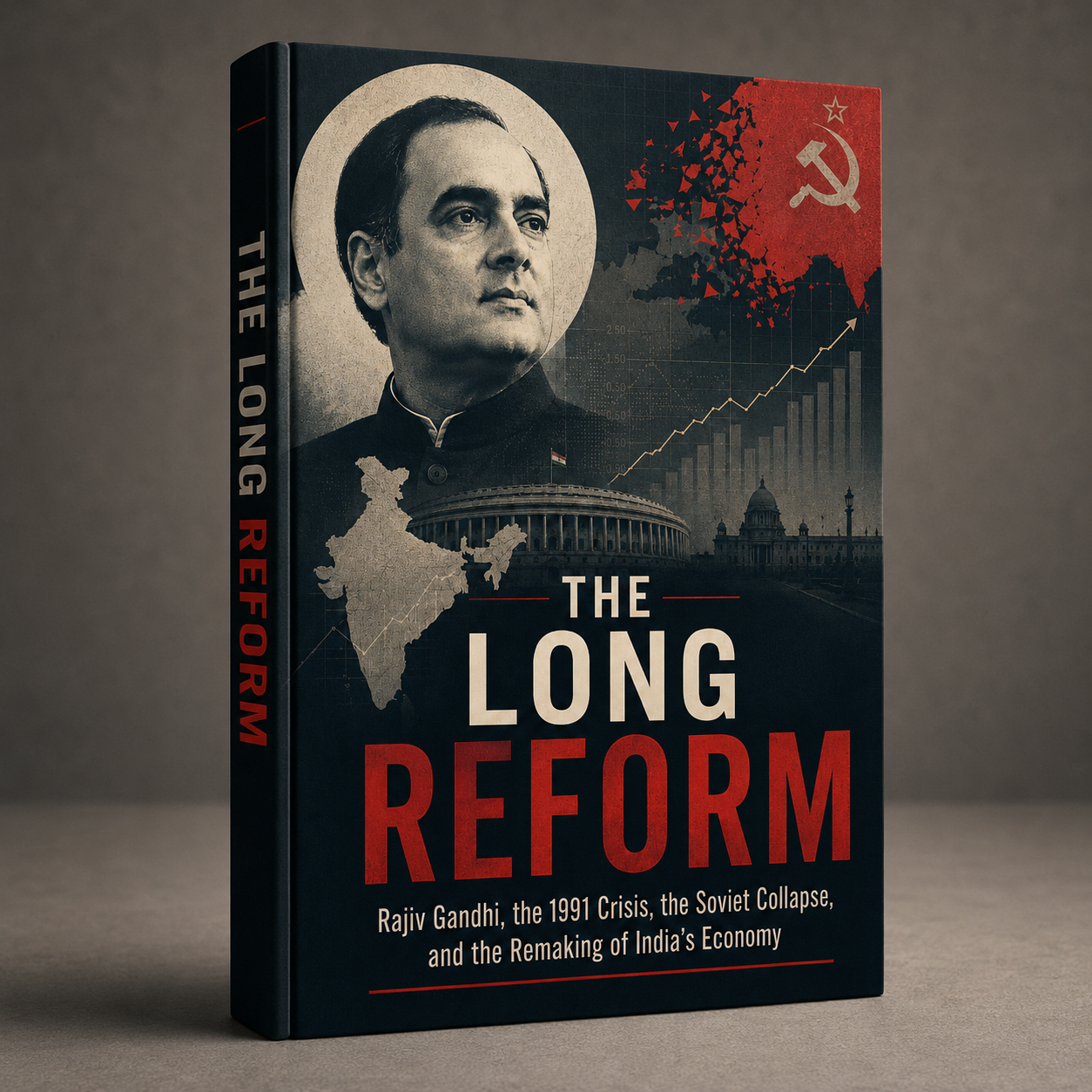
India’s economic reforms did not begin on a single day in July 1991.
Behind the famous 1991 Budget lay more than a decade of experimentation, political conflict, fiscal strain, technological modernisation and mounting external vulnerability.
The Long Reform reconstructs this transformation from the early 1980s through the end of the 1990s, combining economic explanation with political history and documentary evidence.
The book begins with the economic system India built after Independence and the achievements and limitations of the Licence Raj. It then examines the changes associated with Rajiv Gandhi, including industrial delicensing, broad-banding, computer and electronics policy, telecommunications modernisation, tax rationalisation and the introduction of MODVAT.
It asks one of the most important questions in modern Indian economic history:
Did India’s growth acceleration actually begin before the famous reforms of 1991?
The narrative then follows the deterioration of India’s fiscal and external position, the political instability of 1989–91, the Gulf War oil shock, declining foreign-exchange reserves, emergency IMF financing and India’s approach to near-default.
Particular attention is given to the collapse of the Soviet Union and the breakdown of the Indo-Soviet rupee-payment trading system. The book carefully distinguishes this major geopolitical and commercial shock from the immediate causes of India’s July 1991 balance-of-payments emergency.
At the centre of the book is the dramatic reform sequence of 1991:
- the July exchange-rate adjustments;
- dismantling of much of the industrial licensing system;
- reform of the MRTP framework;
- liberalisation of foreign investment;
- tariff and trade reform;
- public-sector restructuring;
- fiscal stabilisation;
- banking reform under the Narasimham Committee;
- SEBI and capital-market reform;
- LERMS and exchange-rate unification;
- current-account convertibility;
- electronic securities markets and dematerialisation;
- private banking and prudential regulation;
- telecom liberalisation;
- and the continuation of reform under coalition governments.
Rather than presenting reform as either an unquestioned triumph or a foreign-imposed disaster, the book examines its achievements and limits.
It asks what happened to:
growth, productivity, poverty, employment, agriculture, inequality, regional development, infrastructure, fiscal stability and India’s economic sovereignty.
Why Read This Book?
The Long Reform is designed for readers interested in:
- modern Indian history;
- Indian economic policy;
- Rajiv Gandhi;
- P. V. Narasimha Rao;
- Dr. Manmohan Singh;
- the 1991 economic crisis;
- India and the Soviet Union;
- liberalisation, privatisation and globalisation;
- UPSC and civil-services preparation;
- economics and political-economy research;
- post-Independence Indian politics.



Reviews
There are no reviews yet.