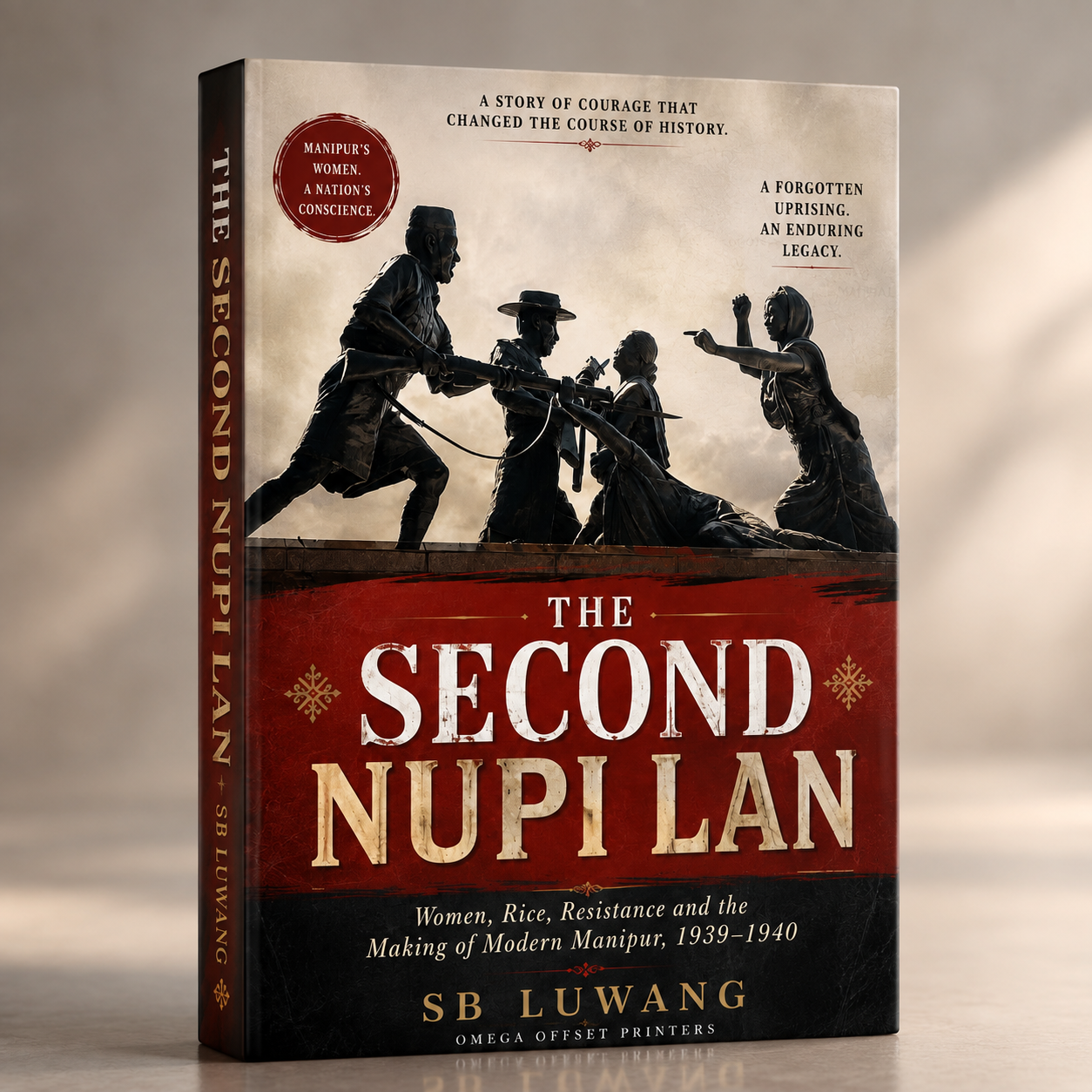
The Second Nupi Lan: Women, Rice, Resistance and the Making of Modern Manipur, 1939–1940 presents a detailed and accessible history of one of the most important women-led movements in the history of Manipur.
Beginning with the rice crisis of 1939, the book reconstructs how concerns over crop damage, rising prices, rice export, mechanised milling and women’s livelihoods led thousands of Manipuri women into mass political action.
Drawing on British administrative reports, Manipur State Darbar records, contemporary newspaper reports, academic publications and Shodhganga research, the book examines the events of 12 December 1939, the Telegraph Office confrontation, the market boycott, resistance against rice mills, the participation of Hijam Irabot and the Nikhil Manipuri Mahasabha, and the movement’s growing connection with constitutional reform.
Rather than presenting the Second Nupi Lan simply as a “rice protest,” this study shows how the movement developed into a wider challenge to the colonial-princely administrative system of Manipur.
Inside the Book
- The political structure of Manipur under British paramountcy
- Women and the economy of colonial Manipur
- Ima Keithel as a centre of women’s economic and political power
- The rice crisis and flood damage of 1939
- Rice export and the Manipur State Darbar
- The events of 12 December 1939
- The Telegraph Office confrontation
- Disputed accounts of injuries and official violence
- The Khwairamband market boycott
- Women’s action against rice mills
- Traders, milling and the politics of rice
- Hijam Irabot and the Nikhil Manipuri Mahasabha
- Women’s petitions and political demands
- Christopher Gimson and the British response
- Constitutional reform and representative government
- Gender, class and the political economy of subsistence
- Ima Keithel as a “parliament from below”
- The legacy of Nupi Lan in modern Manipuri political culture



Reviews
There are no reviews yet.